

September
Remnants of summer, glorious September trees, and tantalising hints of autumn 🍂

Hello, and welcome to ‘The Wild Path’. Here you’ll discover a collection of wild musings inspired by a deep appreciation for all the beautiful little moments Nature gifts us every day. I hope to make my posts as accessible as possible for all Nature lovers, no matter your experience, so I’ve included links to informative pages wherever I mention specific species or points of interest - simply click on any highlighted, underlined words in this post to discover more ❤️ I hope you’ll enjoy joining along with me on this wild journey 🌿
September is one of my very favourite times of the year, and I think this love grows deeper with each passing year ❤️ It’s a wonderfully transient time, when the warmth and bustle of summer blurs with the coolness and slowing pace of autumn, creating such a perfect blend between the two seasons. Insects continue to gather pollen and nectar from the last of the summer flowers, whilst hedgerows are laden with the bounty of fruit which will see so many of our wildlife species’ through the autumn. It’s a month of contrasts and yet abundant life, and one of my very favourite places to visit as the seasonal wheel leads us gently towards autumn is the beautiful parkland and gardens at the National Trust’s Ickworth Estate in Suffolk 🧡


The estate feels most alive at this time of year, when the pathways are still shaded by the trees’ vast leafed canopies, but hints of autumnal colour are starting to cloak the landscape with the season’s mellowing, warm tones. With gently rolling vistas framed by wild hedgerows draped with bright autumnal fruits, there's a beautiful quaintness to Ickworth’s peaceful countryside, and as we followed our usual route through the little valley of the beautifully named River Linnet, and up the steep ascent of Stoney Hill to the upper reaches of the parkland, there were many little remaining signs of summer still to be enjoyed.


Insects were fairly populous all over the parkland, with large European Hornets particularly active, as they have been at countless other locations throughout the year. Like so many other insects this year, Hornets seem to have enjoyed an abundant season, and I’ve loved sighting their hefty forms dart past me on many occasions this spring and summer, displaying a flash of their gloriously rich yellow ochre and burgundy colouration as they go 🥰 One especially impressive individual hovered so low over the small flow of the River Linnet that its wingbeats rippled the water’s surface, perfectly displaying its powerful flight. Countless Bumblebees also took advantage of the pleasantly warm weather and the still bountiful flowers, and a single Common Blue butterfly fluttered by us as we stopped for a while on a log, reminding us that butterflies will still be with us for just a little while longer ❤️
As summer slowly fades, there's no better place to be than amongst trees, and Ickworth brims with such a diversity of stunning examples 🌿 🍁 The trees at Ickworth are its real treasures, from immense, atmospheric veterans, to mixed, younger woodlands full of gathered, tight knit communities of trees. The estate’s parkland is a precious example of surviving wood pasture, one of our rarest and most valuable habitats. Characterised by open pasture land rich with wildflowers and dotted with a variety of mixed aged trees, wood pasture is a unique habitat which supports a huge range of wildlife.
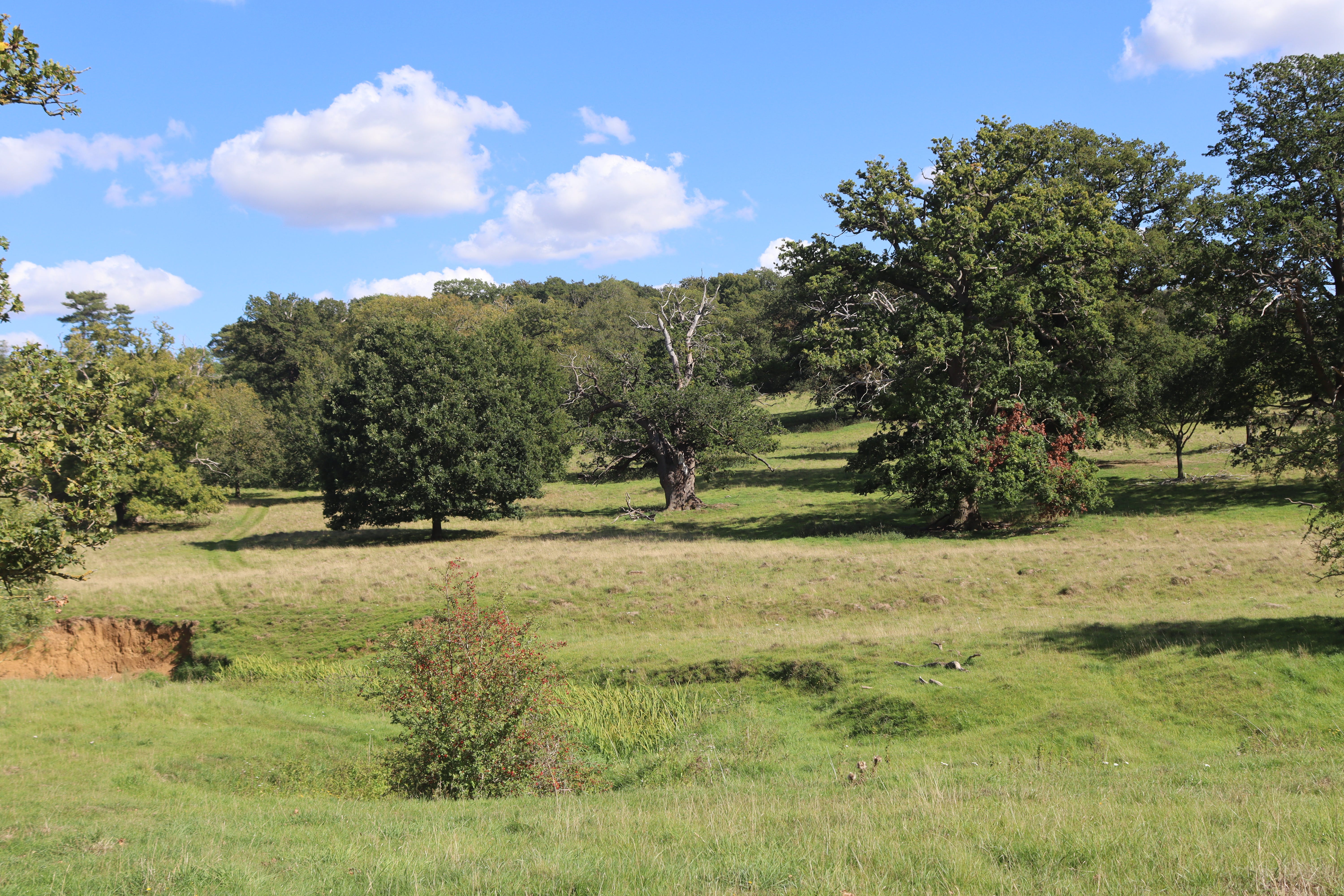
Trees here are able to grow much larger than those inhabiting tightly packed woodlands, developing more complex, wider crowns with a greater density of branches arranged more fully up the height of the tree’s trunk, making their trunks appear much shorter in comparison to high growing woodland trees. With greater access to light and little competition for space, these open grown trees also have a much longer lifespan than their woodland counterparts, continuing to grow even when they shrink in old age, and drop their topmost, heavy branches to lower their canopy, in a process known as retrenching. Retrenching helps lessen the strain on aging trees, but older woodland trees are often overshadowed at this stage of their lives by their taller, younger neighbours, quickening the pace of their death and decay. Without these adverse conditions, however, trees in wood pasture continue to flourish in this next stage of life, and it's these trees which become the short, wide bellied veterans we all so admire ❤️ They decay slowly over a long period, producing a much higher concentration of deadwood, and providing a valuable, essential habitat for a wide spectrum of species, becoming a whole miniature ecosystem in the heart of a single, remarkable organic being ❤️
Ickworth is home to an incredible 1500 ancient and veteran trees, standing proud amongst the softly undulating pasture land, and still breathing such life into this historic landscape. As we wander the parkland we always pass by many glorious examples - some dead, sculptural beauties, whilst others still carry heavy branches weighted with countless leaves and crops of seeds and nuts, which will help found a whole new generation of impressive, woody beings ❤️


Perhaps my favourite tree on the estate is a stunning Oak in the heart of the Albana Walk - a little arboretum at the very edge of the parkland. Although gnarled and bulbous, it’s still very much alive, with its remaining outstretched limbs still boasting a wonderfully green canopy of leaves. Much of the tree’s centre is now barkless, revealing its smooth, pale wood, rippled and peppered with little holes where insects and their larvae have tunnelled into the slowly decaying remnants of once broad branches. This glorious Oak holds such a wonderful presence in its little grove; a stately giant amongst the surrounding, smaller trees, with its aura seeming to encompass you as you draw close. It always warrants spending a few moments beneath its low, wide canopy, gazing up into its weave of hefty, full branches. Just look at its glorious structure! 👇 😍


The final stretch of our lengthy amble around Ickworth is always defined by birds, with the woodland belts at the farthest reaches of the estate always offering some of the very best of Ickworth’s bird sightings. A mix of native trees and evergreens, with an understory of diverse fruit shrubs and climbers, offers an abundance of habitat, with the Pines and Larches particularly popular amongst the smaller birds. Very few people seem to venture to this far corner of the estate, gifting the precious opportunity to tread lightly and quietly, and fall silently into the background of our woodland surroundings. This quietness always helps encourage the undisturbed continuation of all the natural behaviours and interactions playing out all around us, and it's a joy to observe ❤️
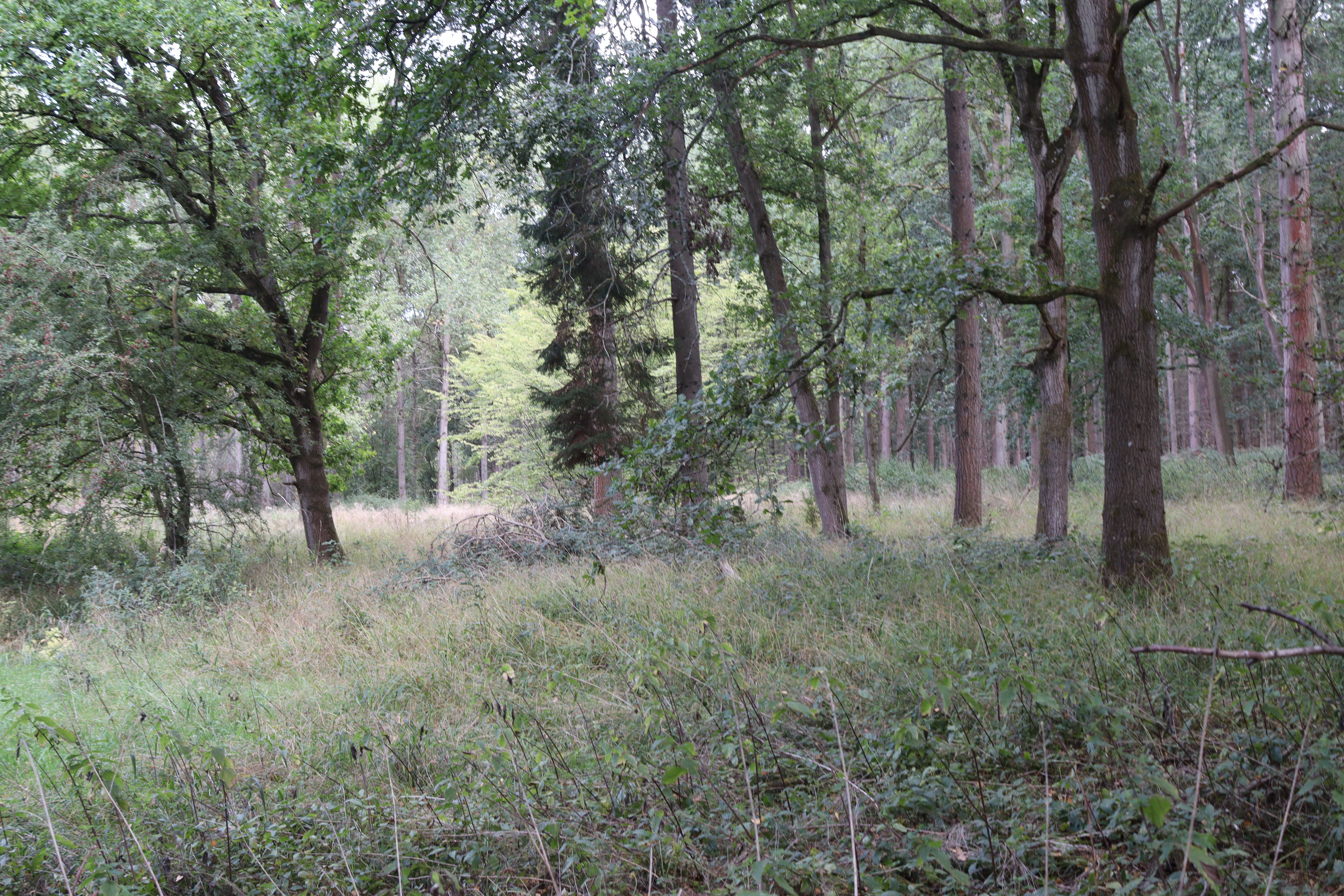
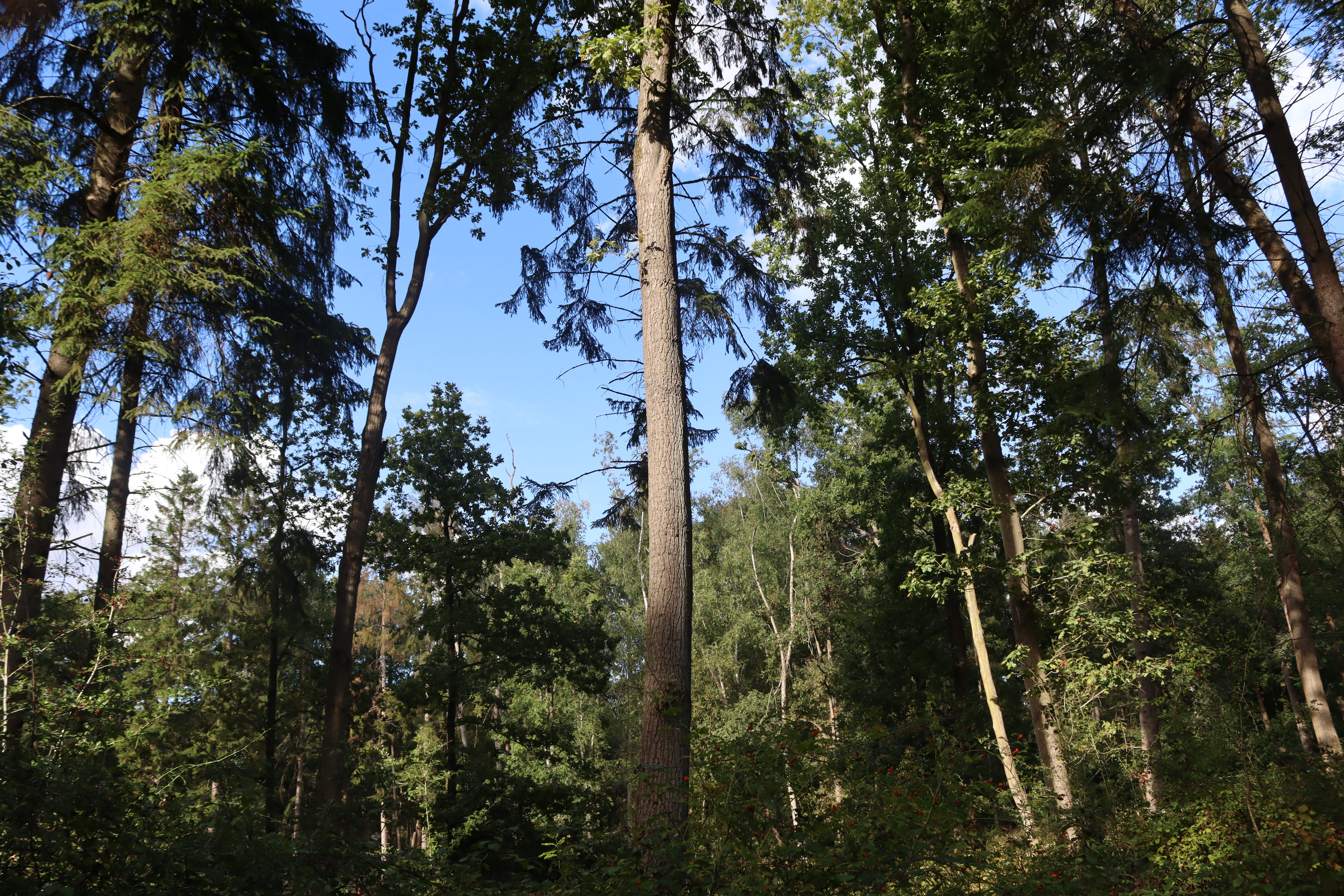
Unperturbed by our presence, the avian life of the wood almost always reveals itself as we pass slowly amongst the trees, and on our latest venture into the woodland, a little flurry of activity in a particular, sun-kissed patch of tall, straight trees made us pause, halting our steps as we gazed around searching for the origins of the calls and sounds which had suddenly risen up around us. A strange, scratching noise sounded out from an area of Larches just in front of us, and a dear little Treecreeper soon came into view, clinging tightly to the tree bark as it gradually circled its way up the tall trunk; its small, curved bill and mouse-like form perfectly silhouetted against the clear sky. We so rarely enjoy an opportunity to observe Treecreepers, so it was lovely to view this little one for some short moments, before it flew out of view ❤️ In the neighbouring Pines, several tiny Goldcrests flitted about, twittering continually as they searched for any little insects amongst the gathered pine needles. We were surprised by brief sightings of a couple of timid Marsh or Willow Tits too - both almost identical in their pale dress of olive feathers, with their black caps and white cheek patches. As declining, red listed bird species’ here in the UK, it's always an encouraging sign, and a real treat to spot ❤️
Fungi became ever more noticeable amongst the deadwood lying upon the dampening woodland floor too; another small reminder of the wonders of autumn we have yet to come ❤️


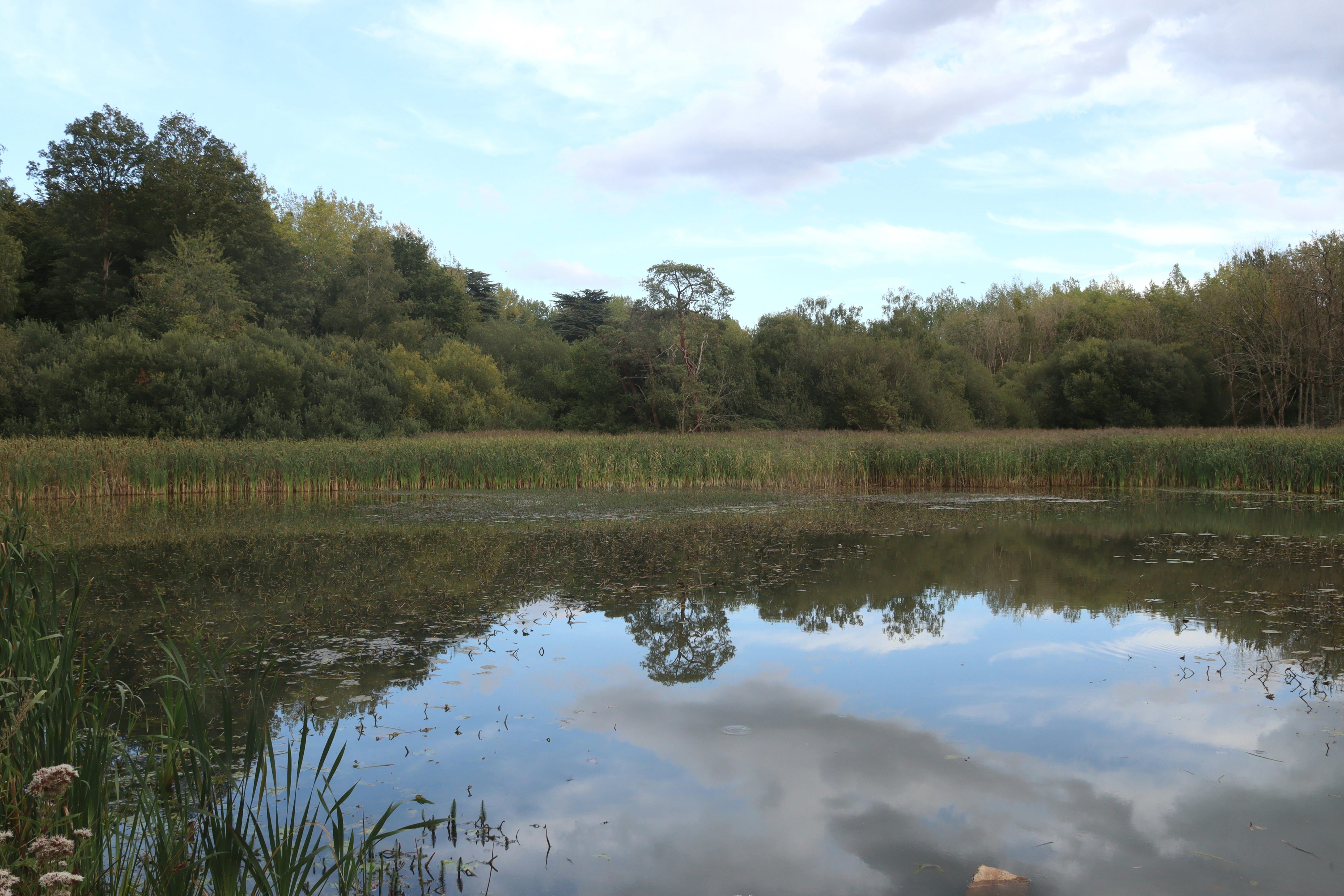
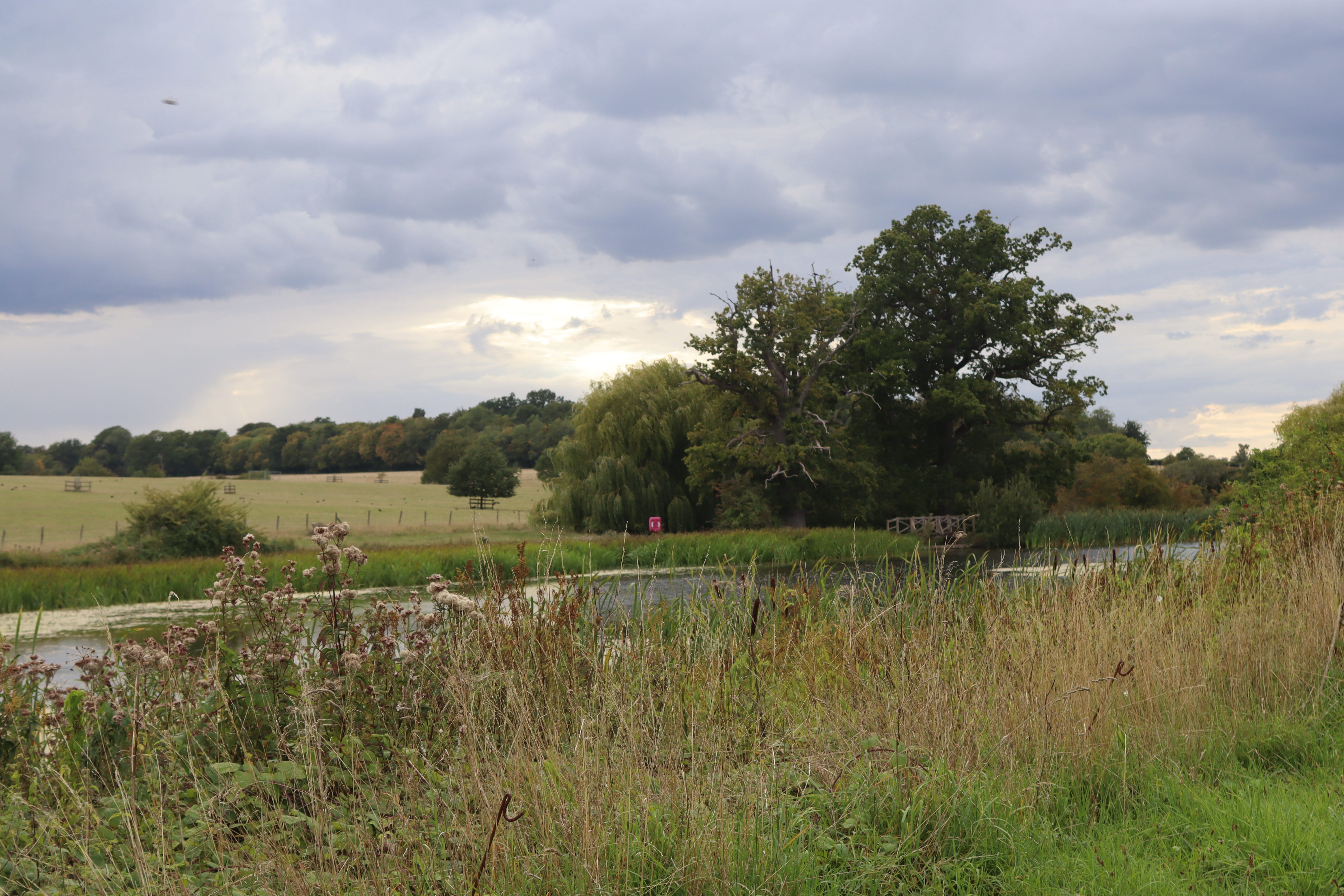
Nearing the very edge of Lady Katharine’s Wood, and bordering the tussocky parkland once more, we approached the magical Fairy Lake - a small, rather hidden, wild stretch of water, and one of two lakes found along Ickworth’s extensive pathways. Here, a resting Buzzard perched high in a tree above the lake’s waters, stretching each of its wings out to full length in turn. All else was rather quiet, however, so we swiftly proceeded on through the open parkland, taking the short walk towards the second lake, where we spotted a number of raucous Jays and Green Woodpeckers, flying up into view several times, before disappearing amongst the large, parkland trees.
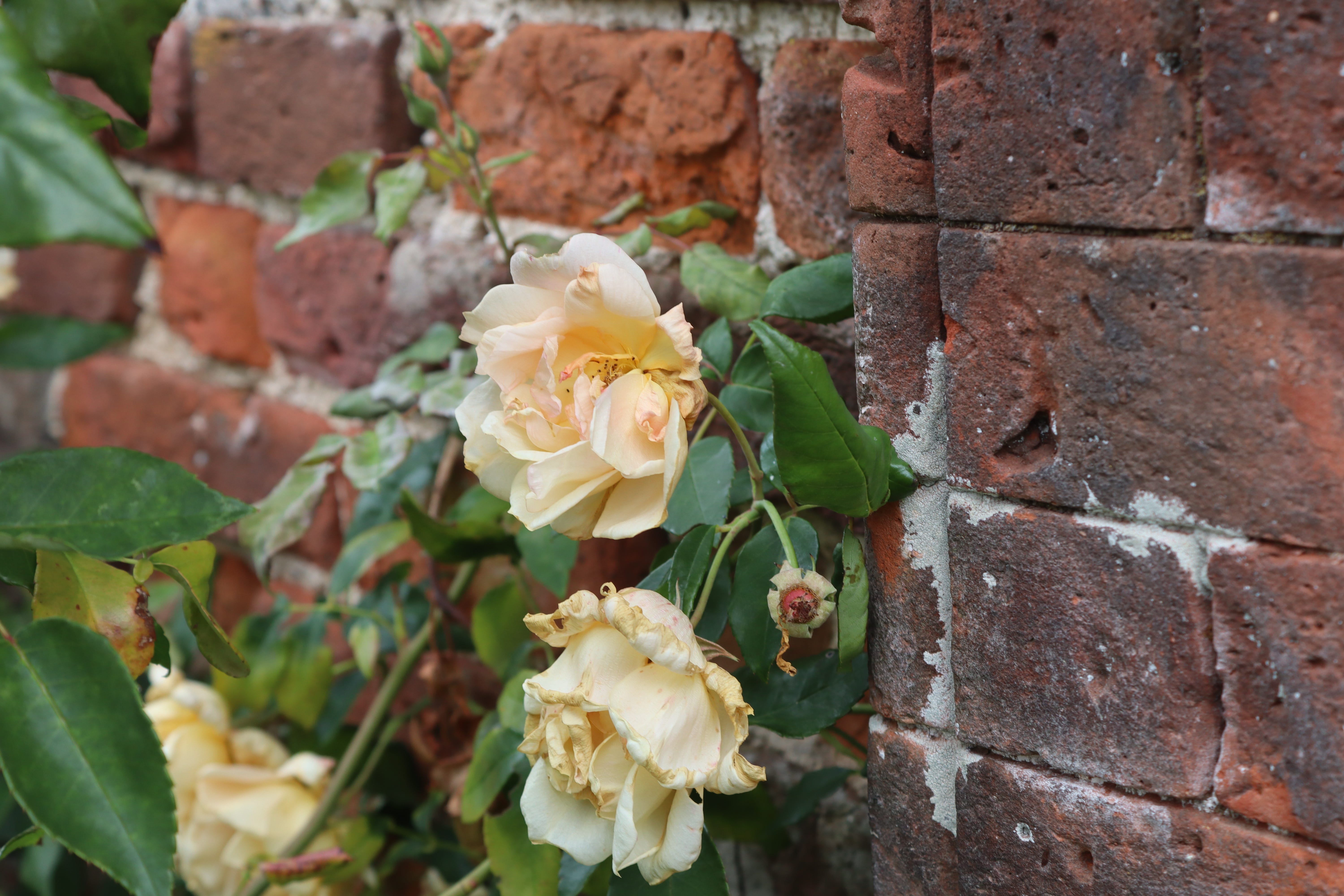
The larger of the lakes rests at the heart of the estate, and beside this long lake, in the shadow of the historic estate church, lies the old walled garden; its green acreage sloping down towards the lake’s waters, and enclosed by an uneven, oddly shaped red brick wall.
Once a vast and productive kitchen garden, it's now a slumbering space; its footprint now largely rough lawn, and its greenhouses rusting and glassless. Many little remnants of the garden’s structure and former use remind visitors of a past when the garden would have bustled, and been teeming with produce and activity. But, even in its decay, life still finds a place there. Tiny, twisting apple trees still produce their crops of fruit each year, and areas of the garden are increasingly functional once more, as the National Trust begins the careful task of restoring this walled garden to its former purpose.


Swathes of wildflowers bloomed, and neat rows of little Lavender plants were beginning to establish, whilst next to the frame of a derelict glasshouse, large sunflowers grew tall and proud besides round, orange pumpkins - a perfect seasonal blend of the bounty of the harvest at this special time of year 🧡🌻
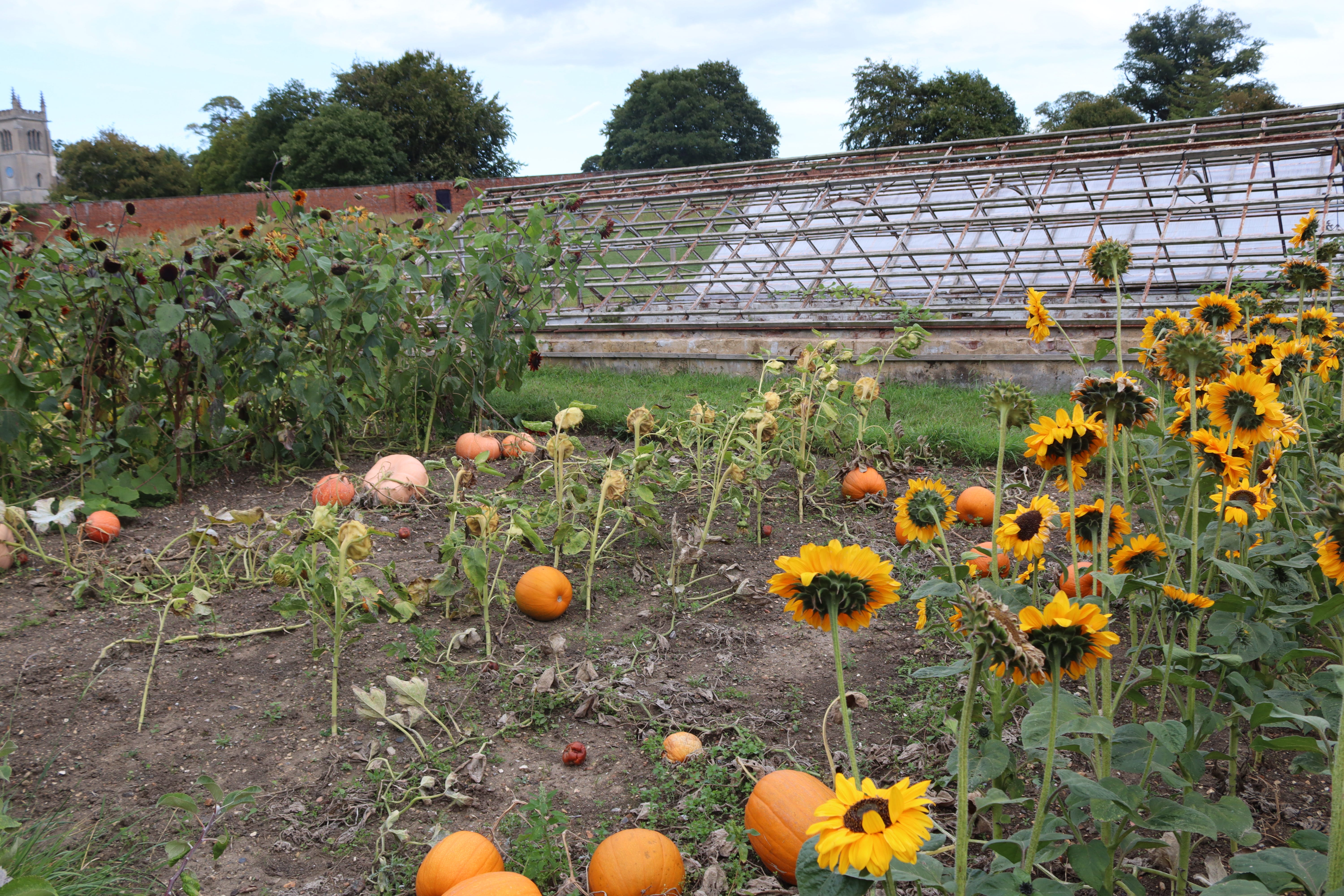
The garden almost acts as a visual metaphor of the nature of autumn itself - a juxtaposition of burgeoning stirrings of new life against a background of decay, existing harmoniously alongside one another. Although life slows down during these colder, darker months of the year, and much begins to decline, from this is sown the promise of new life, as energy is regained and nutrients restored over these months of gentle slumber. Autumn, and its successor winter, provide a new richness to the earth beneath their quiet, unassuming façade; a richness which is so preciously life giving, and which ensures the seasonal cycle begins afresh once more in the spring 🌱 ❤️
What are your favourite things about this time of year? I’d love to hear your thoughts in the comments section below, and discover the things you love most about this special, transitional time of year ❤️

thank you for sharing this, i'm going to be saving this for when i'm ever in the area because it looks like such a treat. i want to live by fairy lake, it looks so peaceful and magical 🤎
What a beautiful place, I loved taking this walk with you - a lovely read. You've made me want to visit there too!
That oak is just magnificent, it's energy is clear even from the photograph. And I was very interested to learn that willow tits are on the red list - as I picked up a call from one on my Merlin app. a few weeks ago. That's an excellent sign - and it was in my garden too :-)