

A Rediscovered Wilderness
The long overdue return to an old, much loved childhood haunt...

Hello, and welcome to ‘The Wild Path’. Here you’ll discover a collection of wild musings inspired by a deep appreciation for all the beautiful little moments Nature gifts us every day. I hope to make my posts as accessible as possible for all Nature lovers, no matter your experience, so I’ve included links to informative pages wherever I mention specific species or points of interest - simply click on any highlighted, underlined words in this post to discover more ❤️ I hope you’ll enjoy joining along with me on this wild journey 🌿
- This post is best viewed via the Substack app or website -
During my early childhood days discovering my love of the natural world there were a number of much loved spots in our area which became the backdrop of my core memories. In these wild spaces I eagerly explored, learning, observing, and thriving outside of the confines of classroom walls in those precious home education years. I gained so much from my experiences and encounters as I went along, and these formative adventures along my very first ‘Wild Paths’ now form the basis of all I know of Nature; a knowledge which is still only just beginning to scratch the surface of all there is to discover.
Broom Gravel Pits was counted amongst our most frequently visited birding spots in our local patch, and I cherish so many wonderful memories spent birdwatching there in my youth. I recently spent a little time looking through some of my old blog posts from those days, and reminisced over the sightings and encounters Broom had gifted us during that time.
Over the years it's so easy to lose touch with those special places, and when we embarked on our nomadic lifestyle back in 2015, we left behind our old haunts in search of new adventures further afield. But as wonderful as those newly discovered spots are, there's always something uniquely significant about those locations which helped shape you as a person in your early days. After many years away, we’ve now found ourselves back in my childhood county whilst we care for my elderly grandparents; a situation which has seen us return and refamiliarise ourselves with many of these special places of our past, stitching together experiences of past and present into a tapestry of wonderful, Nature weaved memories.
For one reason or another, however, we’d never yet made it back to Broom, so, over ten years since our last visit, we finally decided it was about time we did something to change that.
Parking up on a quiet little residential road at the edge of Broom village, we set out to retrace the footpaths of our early birding days. I was filled with such a sense of nervous anticipation, being unsure and anxious about how much it might have changed during our decade long parting. Walking through an open field, we passed through a thin band of trees, and soon arrived at Village Pit, the first of a number of pits sitting in this fairly open, level landscape. Created as result of gravel extraction beginning in the mid 1990s, this seemingly insignificant, scarred landscape was soon reclaimed by Nature, becoming a haven for wildlife as the deep pits transformed into large lakes. Bird life quickly moved into these water-filled remnants of industry, and, as diversity increased, it quickly gained a reputation as a renowned local birding site, with many rare avian visitors stopping off over the years, much to the delight of Bedfordshire birders.
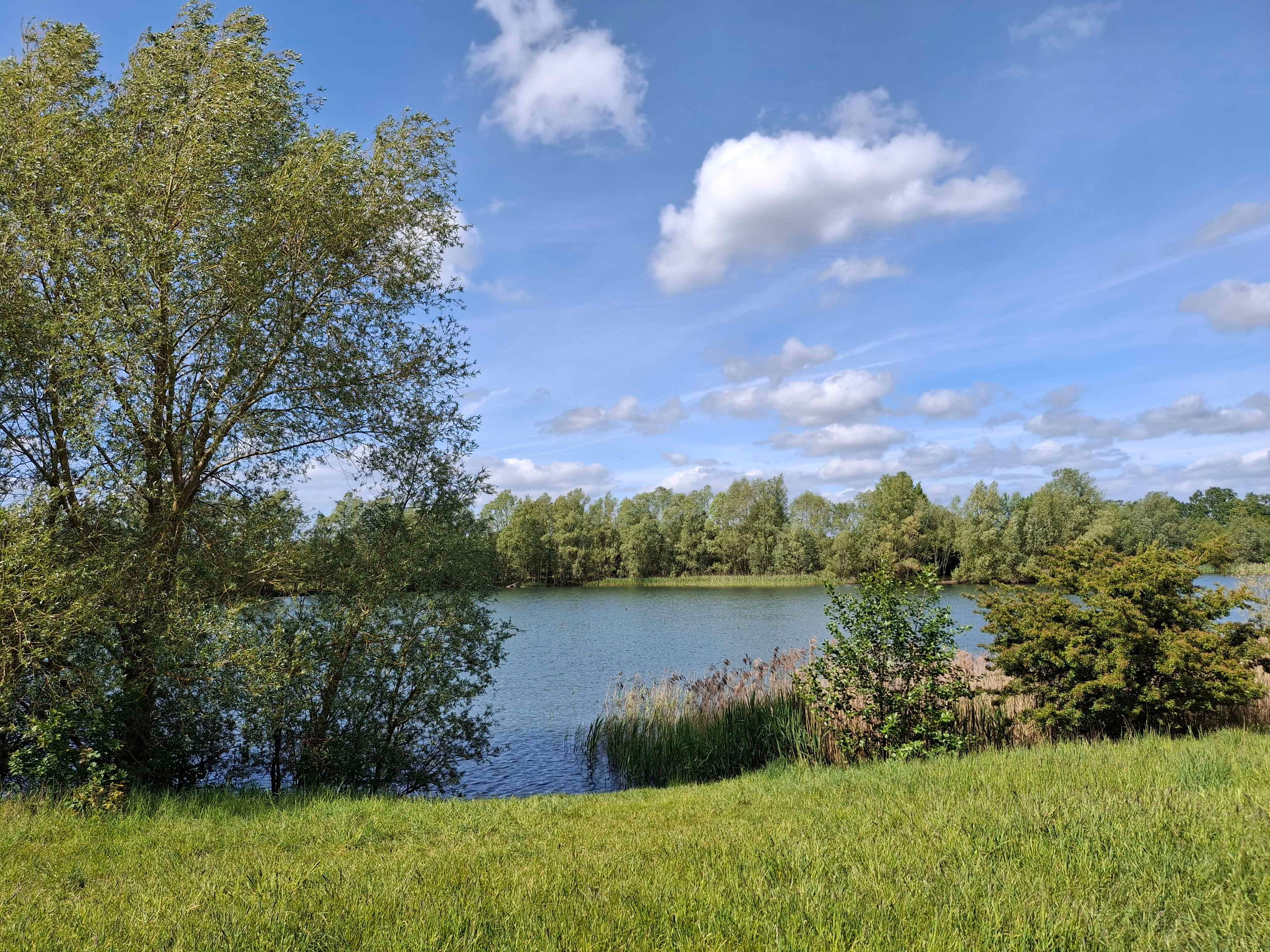
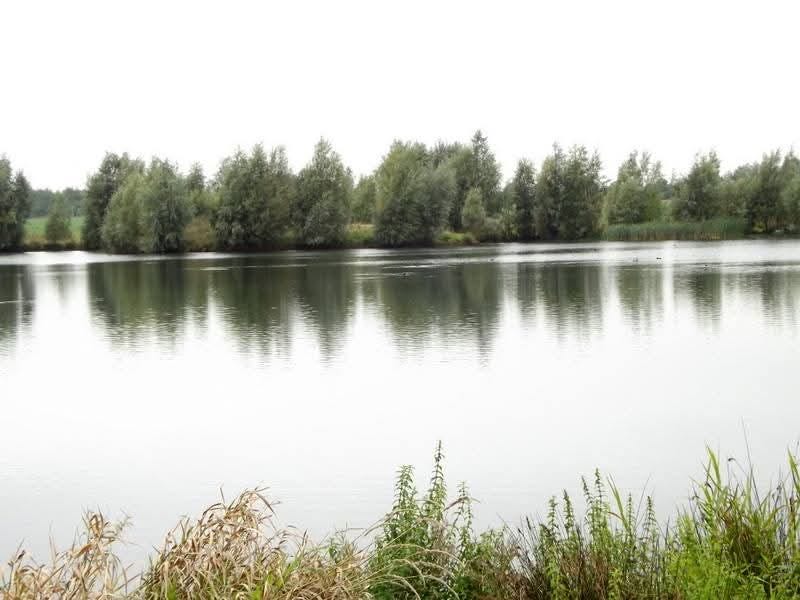
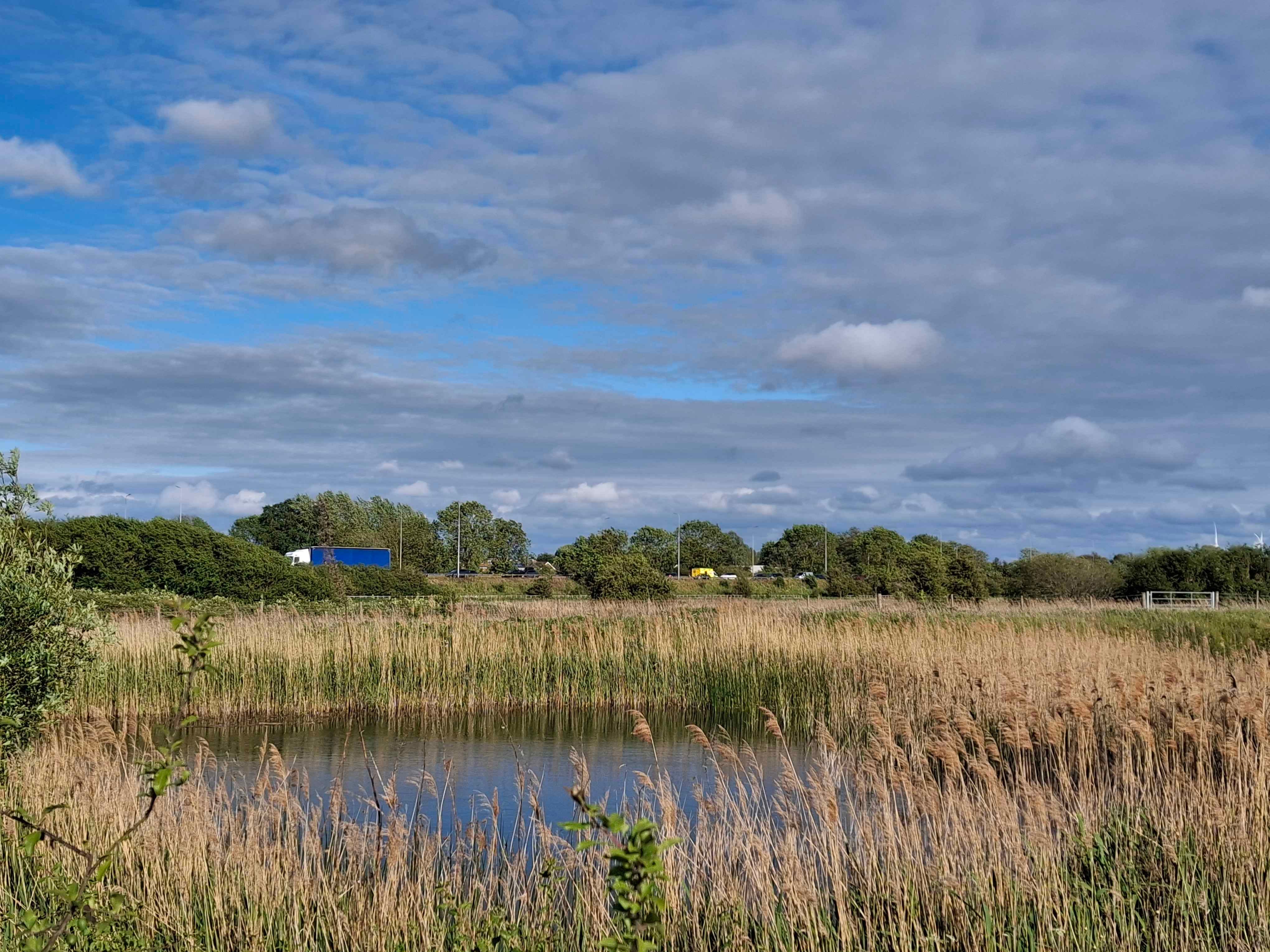
We grew to know the local fauna of these manmade lakes well over our historic visits to Broom, and we affectionately dubbed Village Pit Coot Lake in honour of the rich density of Coots we observed there. As we approached the water’s edge, I was pleased to still see a Coot present out on the water. The Coot’s home, however, had undergone a rather remarkable transformation. It was incredible just how much the greenery had developed over the course of our absence, and the small reedbeds which had been establishing were now dense and edging the lake in thick green and gold ribbons..It was no longer an open round of water bordered by small trees, but one circled by trees of maturity; a lake now taking on a much more naturalised appearance than its former industrial self.
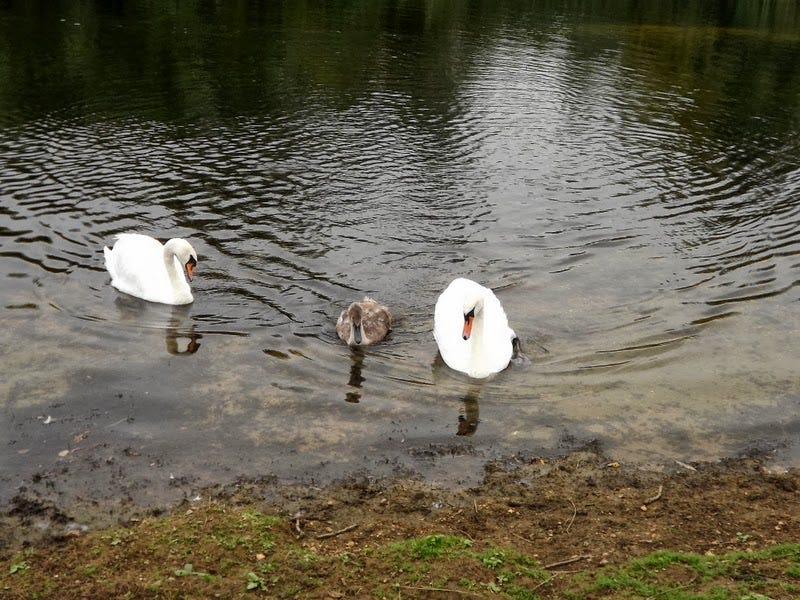
A family of Mute Swans crossed the water’s body, with two parents guiding their six little cygnets; perhaps the very same pair we’d seen raise young there in the past.
All around Coot Lake, trees, shrubs and climbers had entwined to form tightly packed spinneys, where Common Whitethroat, Blackcaps and a Reed Bunting sounded out from the developing scrub; an ideal habitat for these birds to forage and nest in.
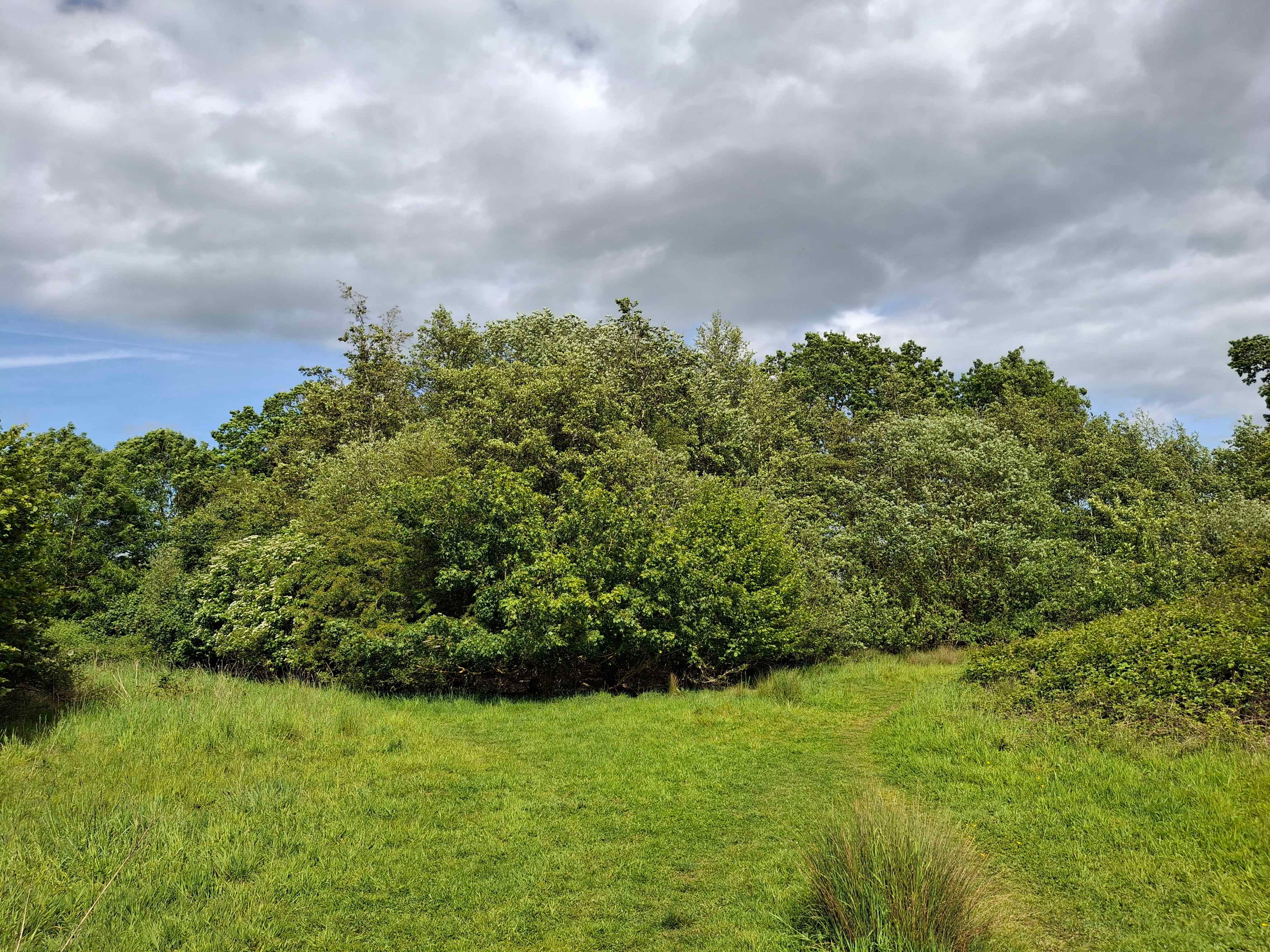
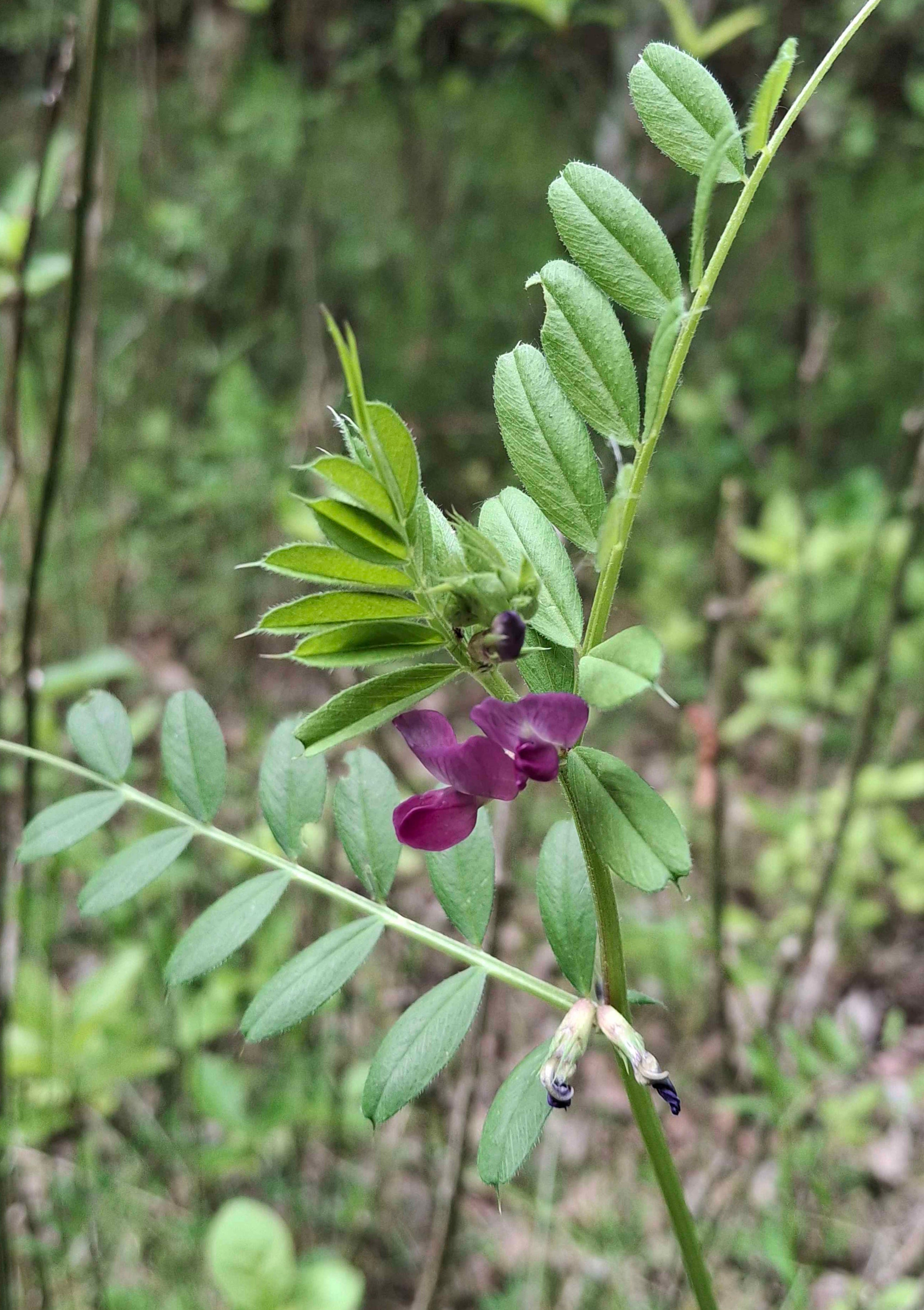
Interspersed between these sheltered tracts of greenery were open, sunsoaked meadows, with tall, ripening grasses and meadow flowers, and along more shaded stretches, magenta hued Common Vetch was abundant; its little flower heads looking just like miniature Sweet Peas.
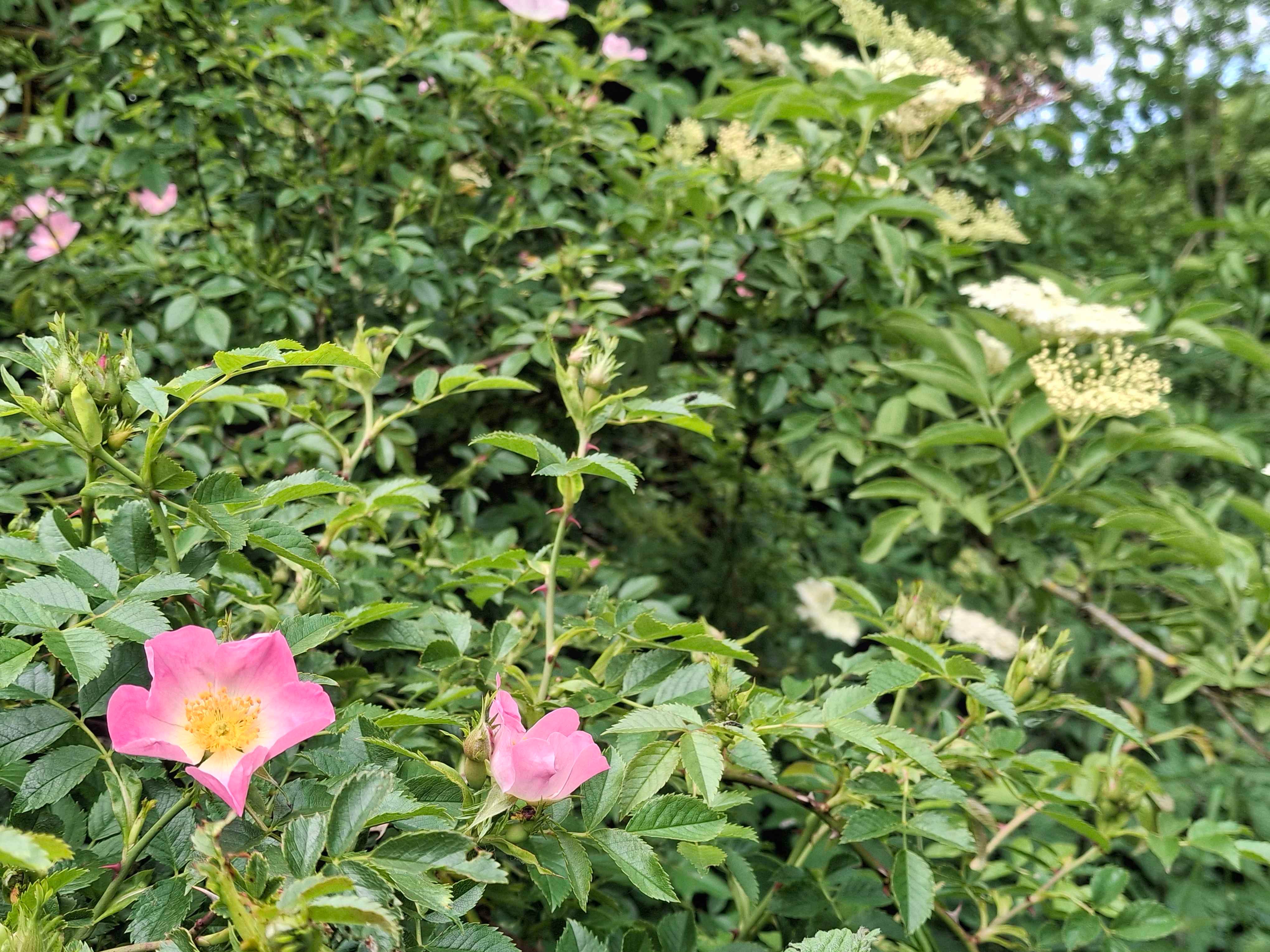
Trekking through a slightly overgrown path overhung by the most glorious flowering Elder and wild Rose, we soon emerged onto the boundary of Peacocks Lake - the main body of water we’d visited all those years ago.
Here, however, we were shocked at how much things had changed beyond recognition. We’d expected lots of tree and shrub growth, but the lake had undergone a huge alteration, entirely reshaped into a private fishing lake. Everything looked so totally unfamiliar, lost in a sea of high fencing, with huge trees enshrouding the shoreline; yet another victim of the enclosure of England's land by private individuals.
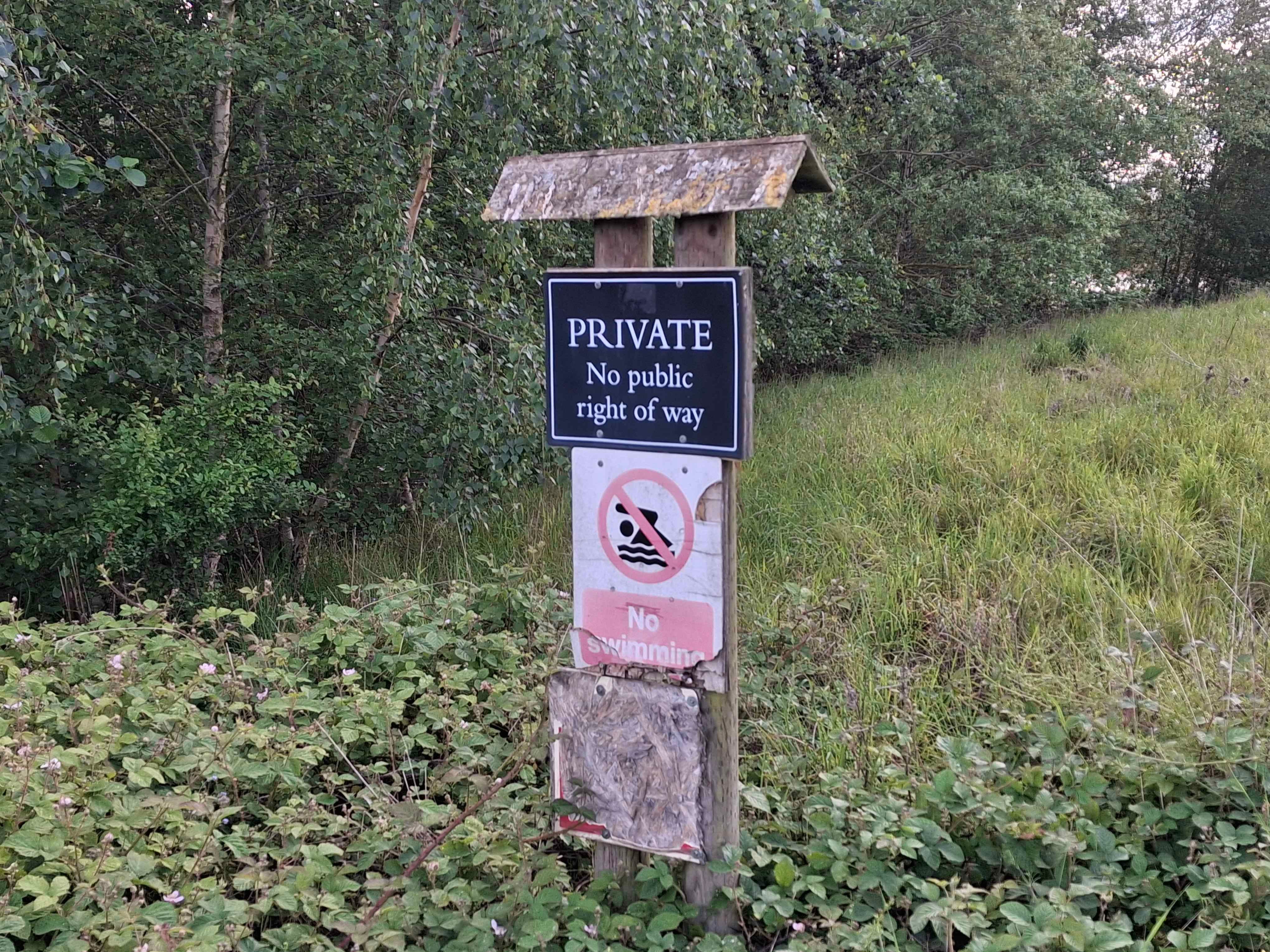
This fencing blocked our access to the water's edge, which had once been a sunbaked, accessible span of wetland; a place where we’d paddled gently in the lapping water, whilst we observed the countless birds attracted to this special spot.
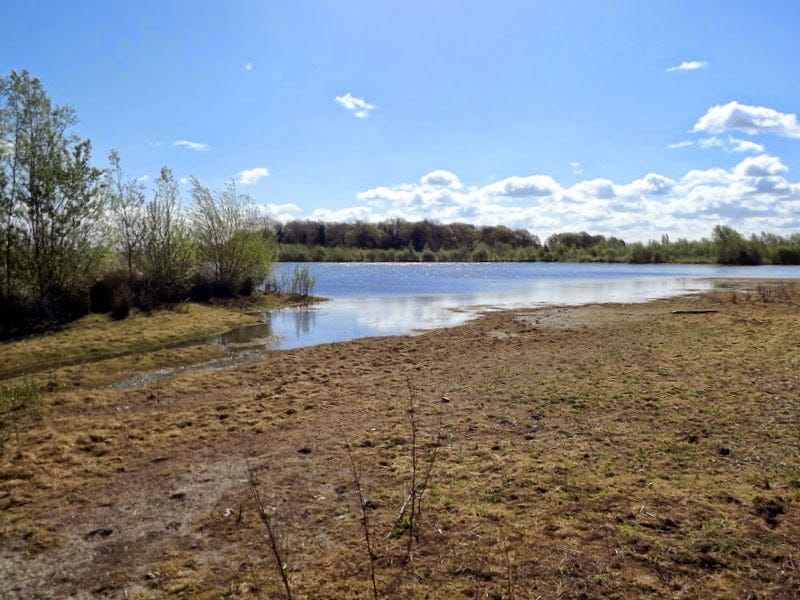
The shallow, muddy edges where waders once foraged had now disappeared, and the scrapes where so many birds nested were all but gone, with water levels seemingly much higher than before. The broad, sun silvered log which had been the Cormorants’ favoured drying spot was still in situ on the edge of the lake’s island, but it now lay beneath a shallow depth of water.
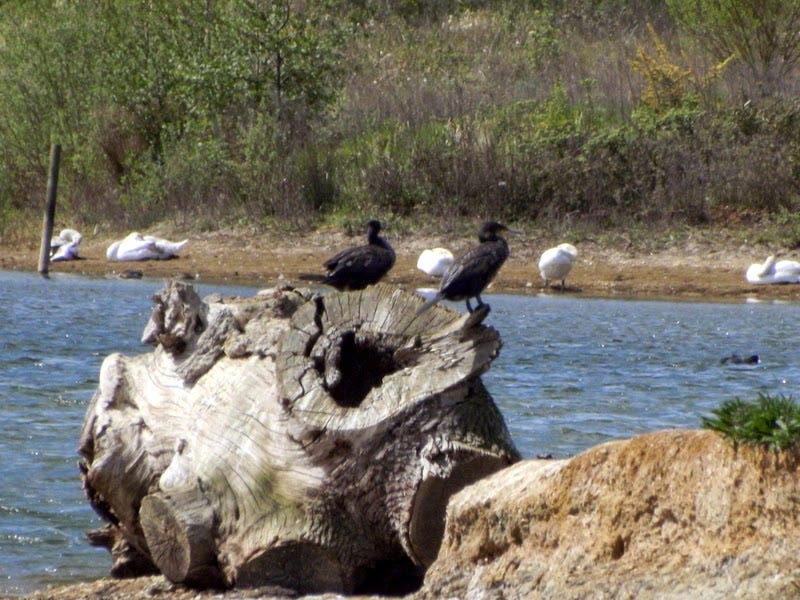
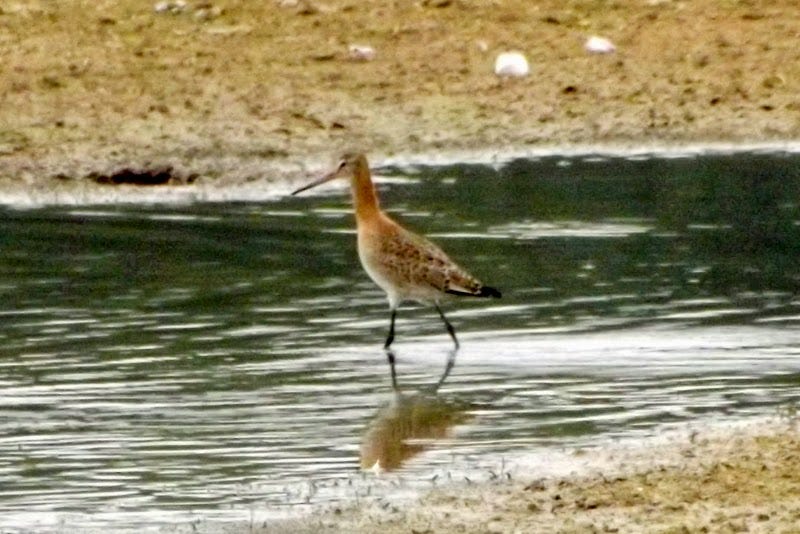
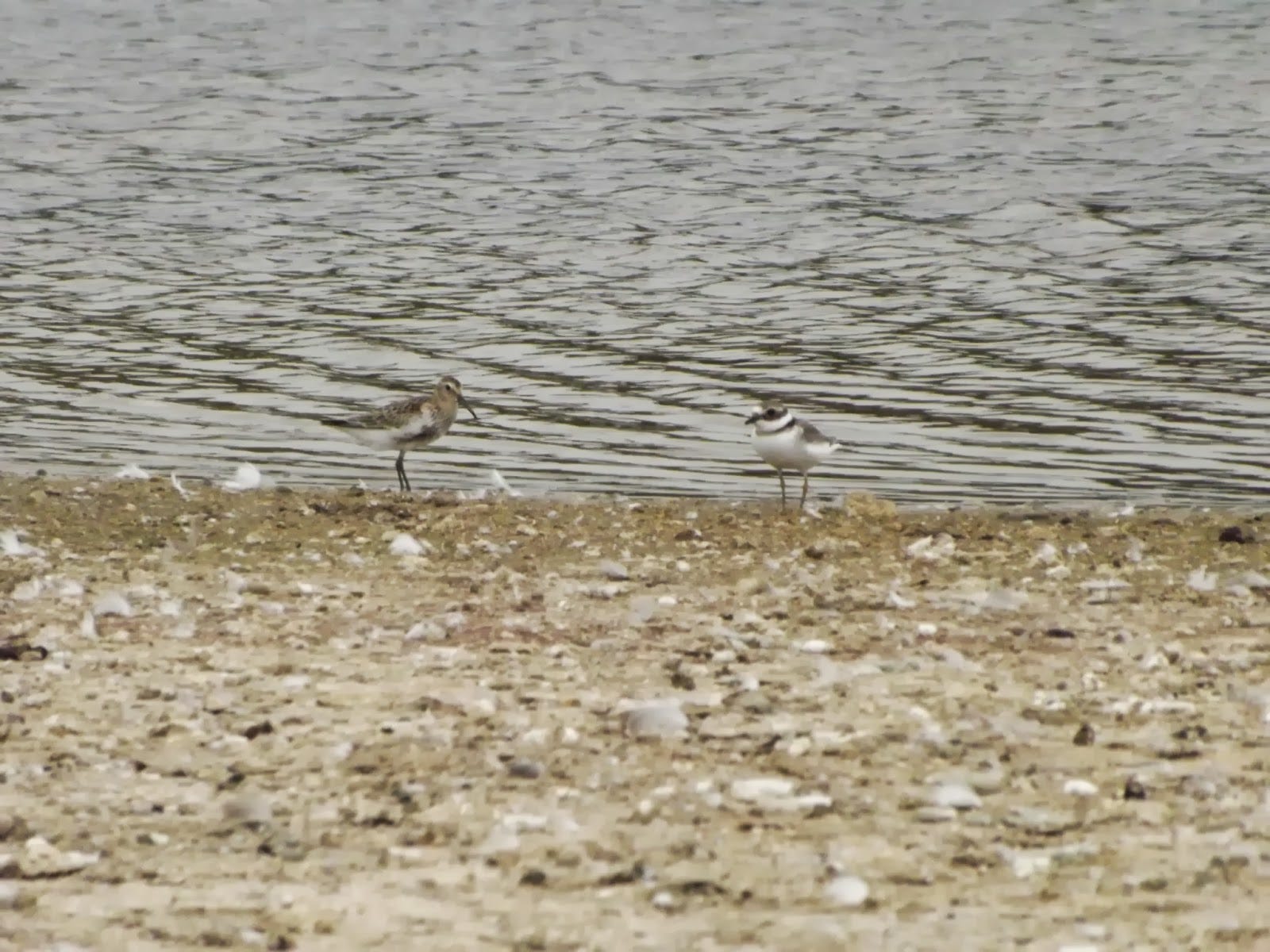
This island once hosted a thriving hub of nesting birds, but it had now fallen silent; its noisy breeding colony of Gulls and Terns having disappeared following several years of failed nesting attempts due to predation. Now, all signs of Gulls, Terns, Cormorants and Geese had vanished, and along the former strip of mud we’d named the ‘Wader Stretch’, we now found very ordinary looking fishing platforms in its place, in the very same spot where we'd met our first Black-tailed Godwit and encountered a memorable pair of Dunlin and Little Ringed Plover.
From the little we could see, the water was seemingly devoid of life, with the exception of a pair of Tufted Ducks near one of many angling posts. The entire soundscape and vibrancy of Peacocks Lake at this lively time of year had been lost in its entirety.
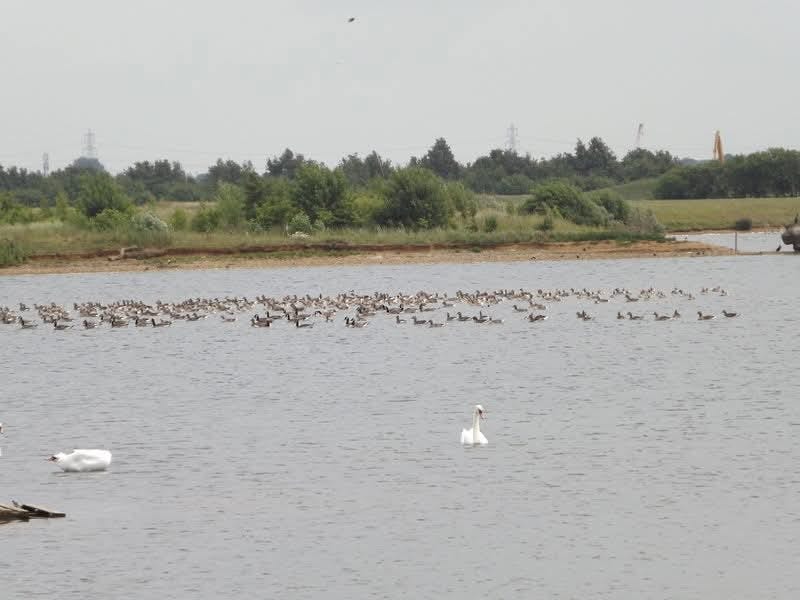
My heart mourned for my old memories, having lost the possibility to ever reconnect with that hallowed place of my adolescence. But across the blustery wheat fields, on the other side of a single track road, lay a refuge, and a place which filled us with some much needed hope.
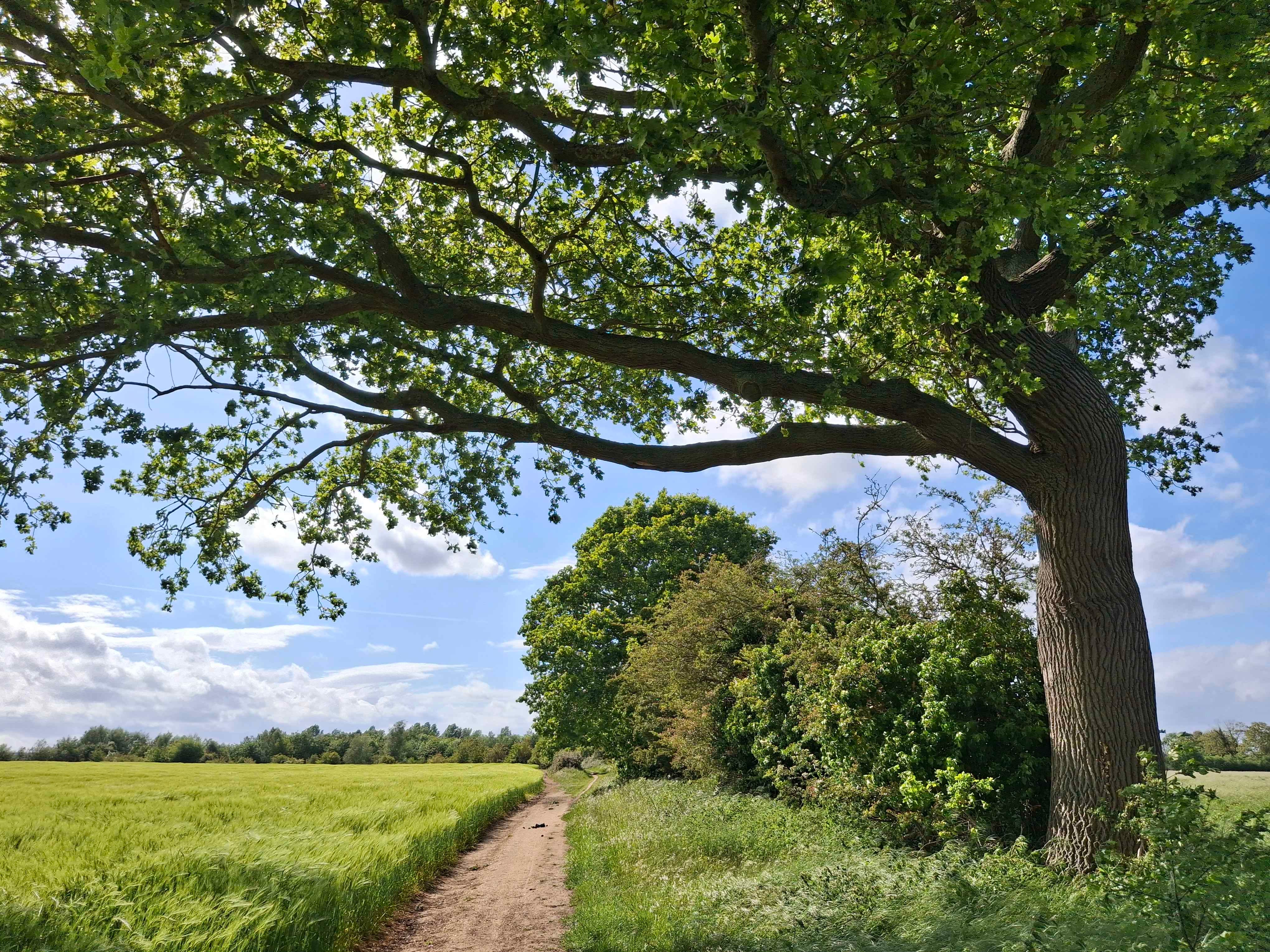
We’d only ventured to this easterly side of Broom’s gravel workings a couple of times before, having always preferred the more secluded nature of the westernmost waters. Back then, this area was at the end of its working life as a quarry, and I vaguely remember seeing the remnants of large areas of exposed ground and spoil heaps. Now, it was a different place entirely. Named Broom East, this side of the pits is a designated nature reserve, and we soon began to realise this was the retreat of all the birdlife we’d come here to seek.
Although still quite bare, this area closely resembled the western gravel pits as we’d once known them, now being at a similar stage in its developmental timeline. With a short grazed area forming a large grassland at the northerly entrance of the reserve, there was a hint of the water beyond in the thin, reed cloaked channel running at a slight decline through the field. Here, we could already see a pair of Egyptian Geese grazing the closely mown grass, and, as we scoped every inch of the grassland with our binoculars, we soon spotted a Lapwing too, igniting hope that we were in for a chance of meeting the species we’d once known here after all.
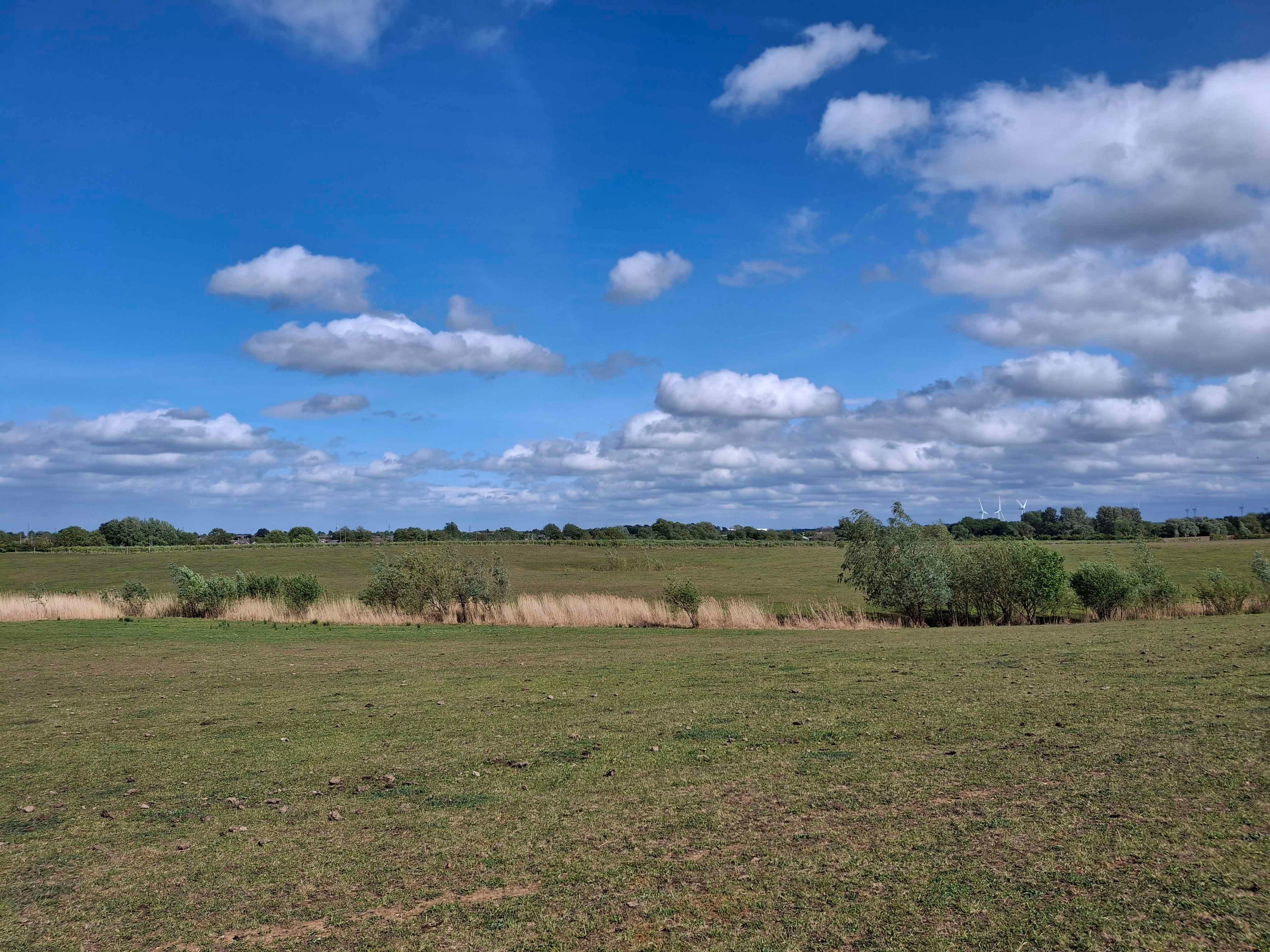
Barely disturbed by our presence, this Lapwing posed close to the wired boundary fence, offering us the closest views of this delightful little wader we’ve ever had the pleasure of experiencing. Its rainbow wings shimmered iridescently in the sunshine, revealing a kaleidoscope of greens, purples, browns, blues, greys, black and cream, all harmonising to create this little beauty's glorious form. With its stance just like those seen in illustrated bird guides, we were able to truly appreciate every little feather detail from this proximity, including the elegant flick of its perfect little crest rising above its head. Nearby, its partner sat diligently on their nest, and we were so excited to observe two nesting pairs in total - the first time we’d ever been lucky enough to view nesting Lapwings. As a red listed species which has seen significant declines, it was so heartening to see them benefitting from this establishing habitat.
Following the direction of the grassland channel, we edged closer towards the brow of a small ridge, where we were finally treated to a view over its summit. A large body of water lay before us, complete with scrapes, muddy edges and areas of dense, water loving trees. This was exactly the kind of habitat we’d loved so much over at Peacocks Lake, and I was flooded with a huge sense of relief that there was still a similar area of Broom dedicated entirely to Nature. Any disappointment I’d felt was quelled for a moment, as I became absorbed in the joy and excitement of discovering a new, largely unknown wilderness.
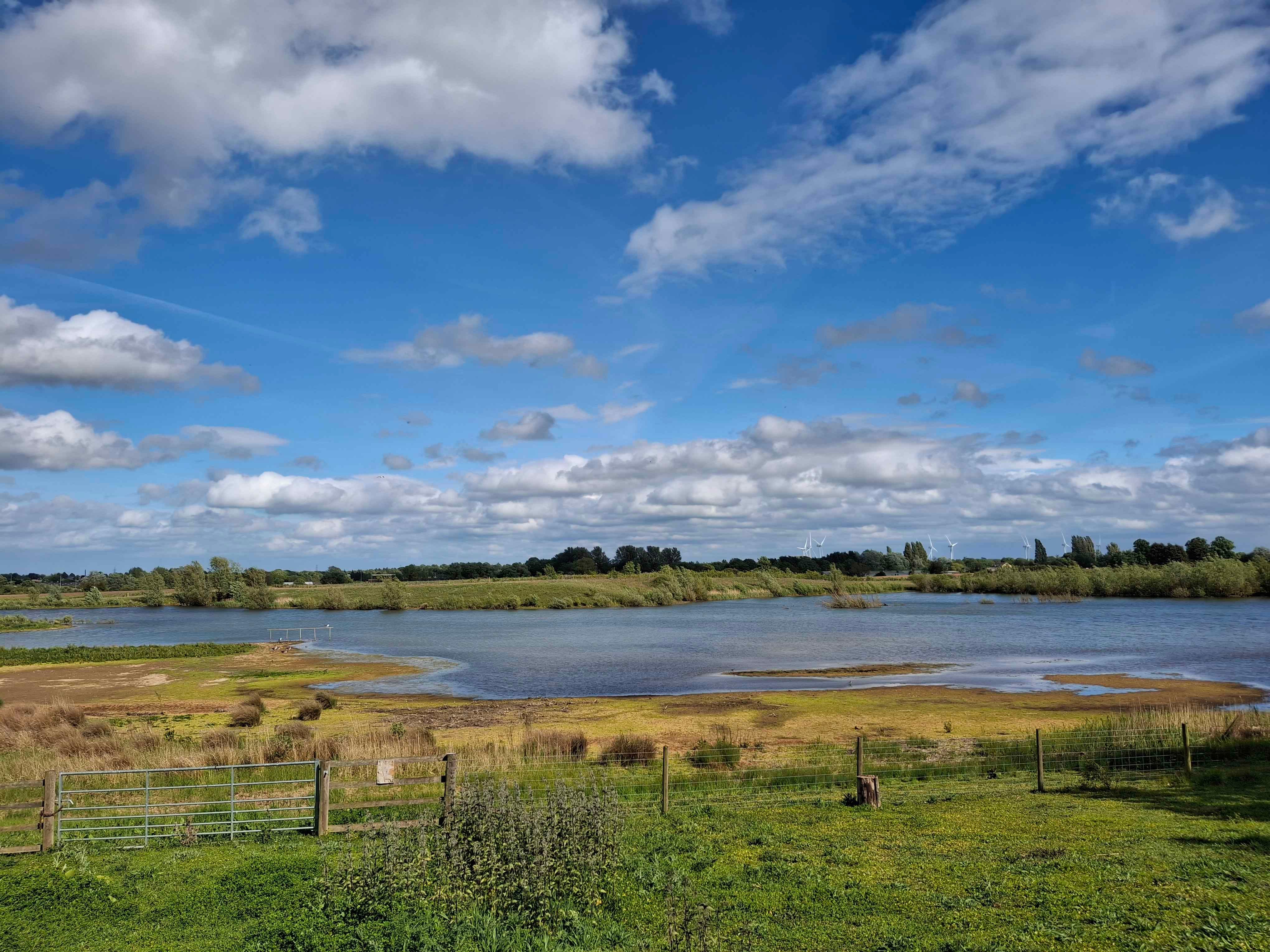
Here, more Lapwings were gathered. Rising into the air in a flustered flap of wings, these Lapwings were calling out an alarm, banding together to chase off a gang of Jackdaws who’d identified a potential hunting opportunity. Watching intently to see what all the fuss was about, I soon witnessed one of the Jackdaws swoop, rising again with a tiny, fluffy chick in its grasp. The parents dived down to attack the imposter, and whilst it all happened so fast, I’m almost certain it dropped the chick, from a height I’m unsure it would have survived. The Jackdaws abandoned their quarry having been scared off by the protective Lapwings, in an event which certainly added a bit of drama to the opening of our visit.
Although we’re so often out amongst the natural world we so very rarely witness predatory behaviour like this. It was incredibly sad to see the Lapwings’ breeding success thwarted by this attack, but it's so important not to negatively judge predators like the Jackdaws. They, too, will have hungry mouths to feed, and, whilst not as visibly predatory, the Lapwings themselves rely on hunting smaller, invertebrate prey to survive. Every single species has its place within a vast, intertwining web of life, with both predator and prey equally as important as the other, and I always value each and every one with the same level of respect and fascination.
Lesser Black-backed Gulls kept a watch over the scrapes from the vantage point of the Tern rail; another enemy for the Lapwings to keep an eye on. Beneath them, a single Redshank waded in the shallows; a bird we’d encountered at Broom way back in 2013. Here it still was, thriving just a short way from our original ‘Wader Stretch’. With its tall, distinguishing orange-red legs, it was standing high above the water, using its lengthy bill to probe for food below the surface. Usually a bird we only stumble upon on our visits to Norfolk’s coastal saltmarshes, it was a treat to see one in Bedfordshire once again ❤️
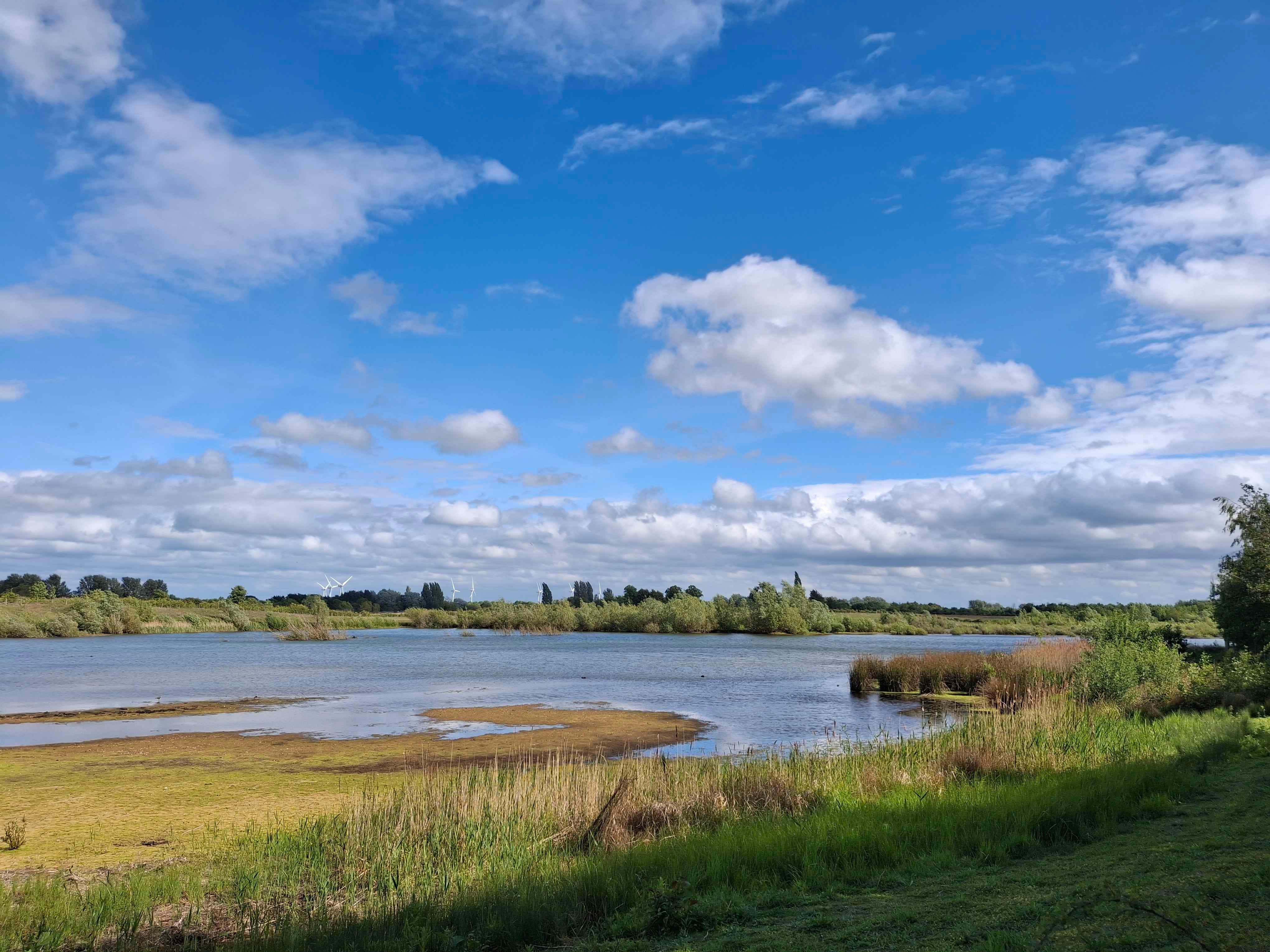
A little Pied Wagtail bathed at the water’s edge, and out on the water, small bands of Tufted Ducks had gathered, accompanied by some rather furiously fighting Coots; their wings crashing into the water in huge splashes, sending up great fountains all around them. A couple of Little Grebes hugged the margins of the tree-lined boundary, and here was another family of Mute Swans, this time with seven cygnets to the pair. Where all seemed quiet over on the opposite side of the lane, life here was thriving, in all its messy, complex glory.
There was no sign of the Little Ringed Plovers that had been sighted, or the Cuckoo that had been heard daily according to recent records on eBird, but it was wonderful to know they did both still have a presence here. Broom holds the accolade of being the spot where we’d experienced our first ever Cuckoo sighting near Peacocks Lake way back in 2015. The previous year I’d written of my hopes of one day seeing a Cuckoo, and it touched my heart to know that, all these years later, I've more than achieved those dreams, being lucky enough to spot a few each year since that first cherished encounter ❤️
Although this vast vista of the water was the main viewing point of the small reserve, we were pleased to discover the presence of a circular footpath highlighted by an information board near the main gated entrance. Intrigued to discover more of this developing habitat, we decided to continue on, following the path along the edge of the pit, through a circling tunnel of sheltered trees and shrubs. It was clear that few took this route, with the path hardly perceivable amongst the long grass, and although we were so close to the lane, the footpath possessed a wonderfully wild atmosphere, where you felt entirely encompassed by the natural world under the protection of its buffering tangle of greenery.
The trees largely obscured our view of the water for the most part, but following an enticing suggestion of a thin track, we emerged out into the open for a moment, where a Buzzard swooped low over the tufty grass to take a high position in a Birch tree. Its peace was soon broken by a mobbing Magpie, who was very displeased with its presence, and continually bombarded the poor bird. The Buzzard, however, stood its ground, seeming unperturbed by the Magpie’s pecking attacks, and remaining steadfast on its shaded perch. As a large avian predator, it must be all too used to this kind of behaviour, with smaller birds always prepared to defensively protect their territory and offspring from any perceived danger.
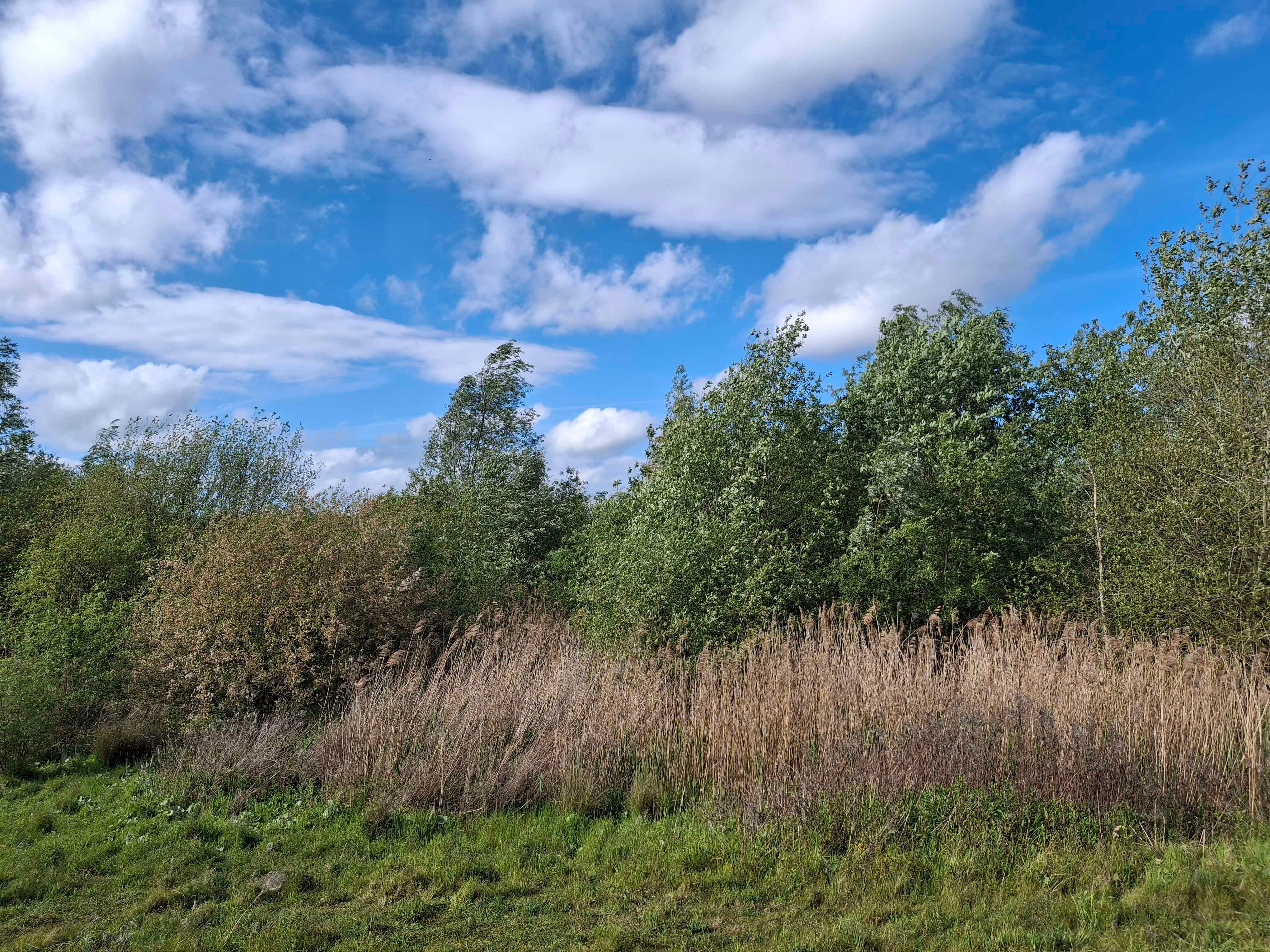
Nearby, a small pool at this southern end of the water was the sanctuary of a collection of diving ducks, chiefly consisting of yet more Tufted Ducks. Amongst the group, however, was a bird which lacked the two toned colouration of the male and female Tufted Duck, and instead boasted the most glorious pale grey body of vermiculated feathers, and a head of wonderful burgundy brown, capped off at either end by the solid black of its chest and tail feathers. A bird we’d not expected to see, this smart little duck proved to be a Pochard - one of three males bobbing happily besides their companion ducks in this sheltered spot.
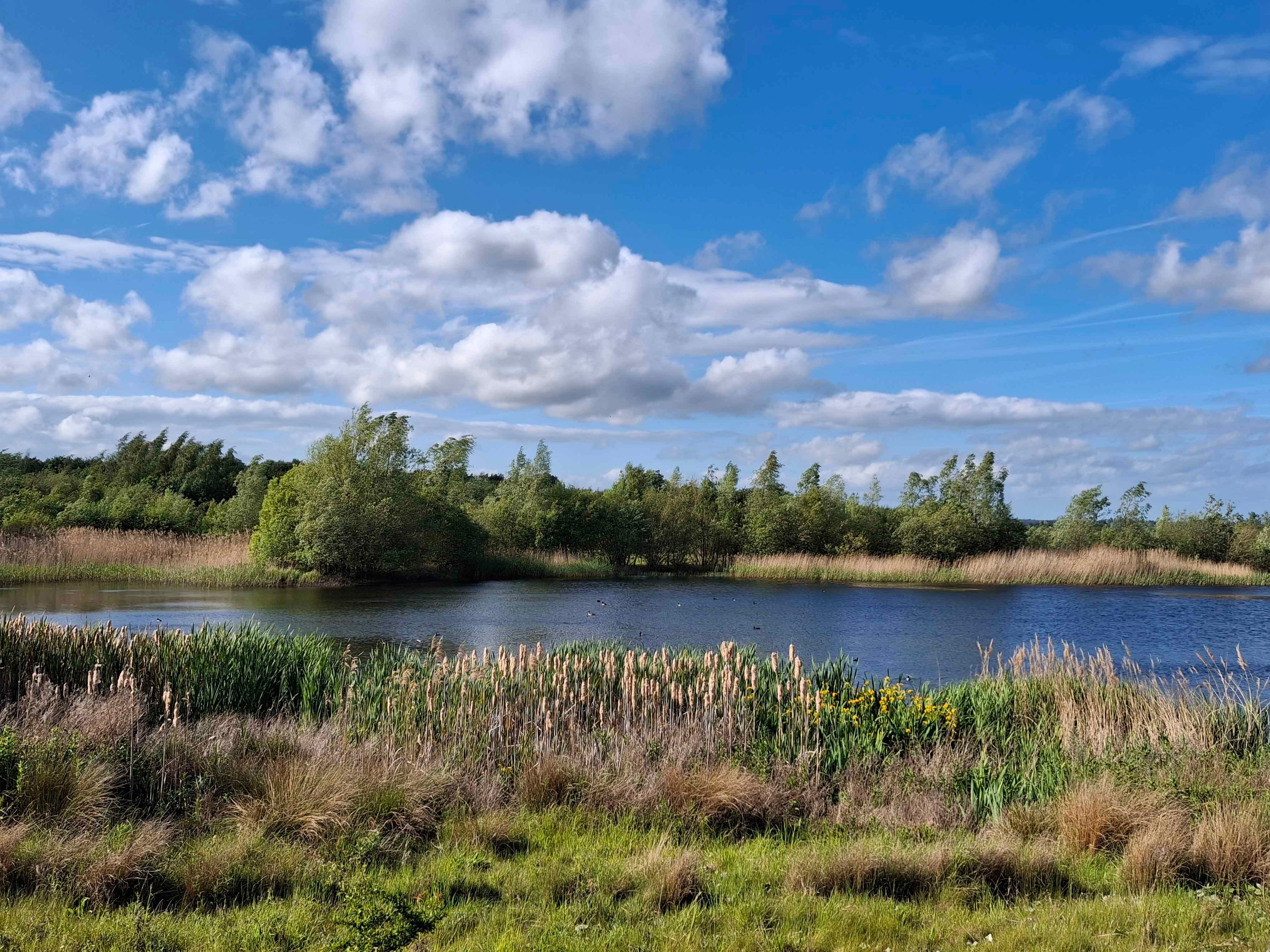
Surrounding the pool was a circle of swaying reeds, where the sound of a couple of Reed Warblers reached our ears in a whisper against the increasing gusty winds, and above the infant reedbed where they were hidden, a bird I’d held a hope I might see came into view - my very first sighting of a Marsh Harrier within Bedfordshire’s borders. Flying fairly high in the sky, it was hard to distinguish until we drew up our binoculars and caught a glimpse of its identifying chestnut brown plumage and cream feather detailing. Holding itself almost statically above the reeds for a short time, it soon folded its wings tightly against its body, before diving out of sight; a brief, but welcomed, local first ❤️ Our largest harrier here in the UK, these wetland specialists were once an incredibly rare and persecuted species, with their population declining so severely that they were limited to just a single nesting pair in Suffolk just 50 years ago. Now, however, conservation efforts have seen their numbers rise, with around 600 pairs now calling our wetland habitats’ home. We’ve been lucky enough to sight them on many occasions whilst exploring the extensive reedbeds of East Anglia, but I only recently discovered that you could now find Marsh Harriers within the county of my birth. I was so pleased to learn that they’re now counted amongst Bedfordshire's breeding birds, and to now see them present at Broom.
Leaving the Marsh Harrier’s haunt behind, the path soon reached the boundary of the farmland, opening up to reveal 360° views of the surrounding land. Here, on this farthestmost boundary of the pits, we could now see the other side of the water to our left, and to our right across an inclining onion field, where the old, yellow brick mill buildings at Jordans Mill (home to Jordans cereal) nestled in a little fold of the river valley, and all the great lorries and cars stacked up on the busy A1 just a field or two away. None of the motorists had any idea of all the life hiding so close by. We ourselves had passed along that same stretch of road many times, but I’d had no idea just how close this reserve was. It certainly explained why we’d spotted so many Lapwings as we travelled by in the past.
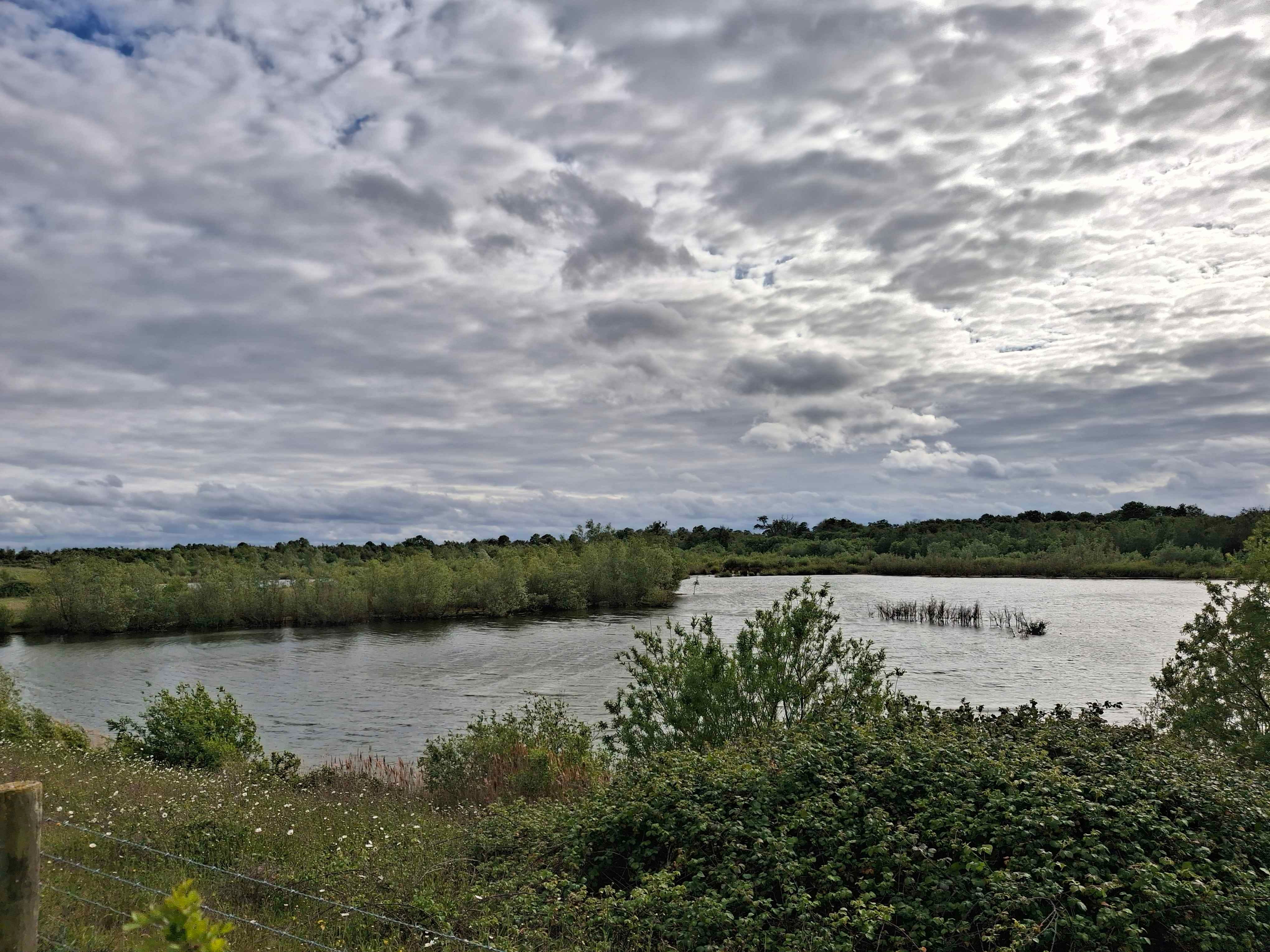
A swirl of Sand Martins surrounded us as we slowly followed the permissive path through the field - so close we could see their little forked tails as they swooped around the dense, rose clad hedge towards the water, skimming its surface as they sped through. As they dived and darted, they passed a lone Cormorant who was resting for a moment on one of the island spits, and joining the Sand Martins in the air, a single Oystercatcher passed by; its white wing bars contrasting so strikingly against the predominant black of its plumage.
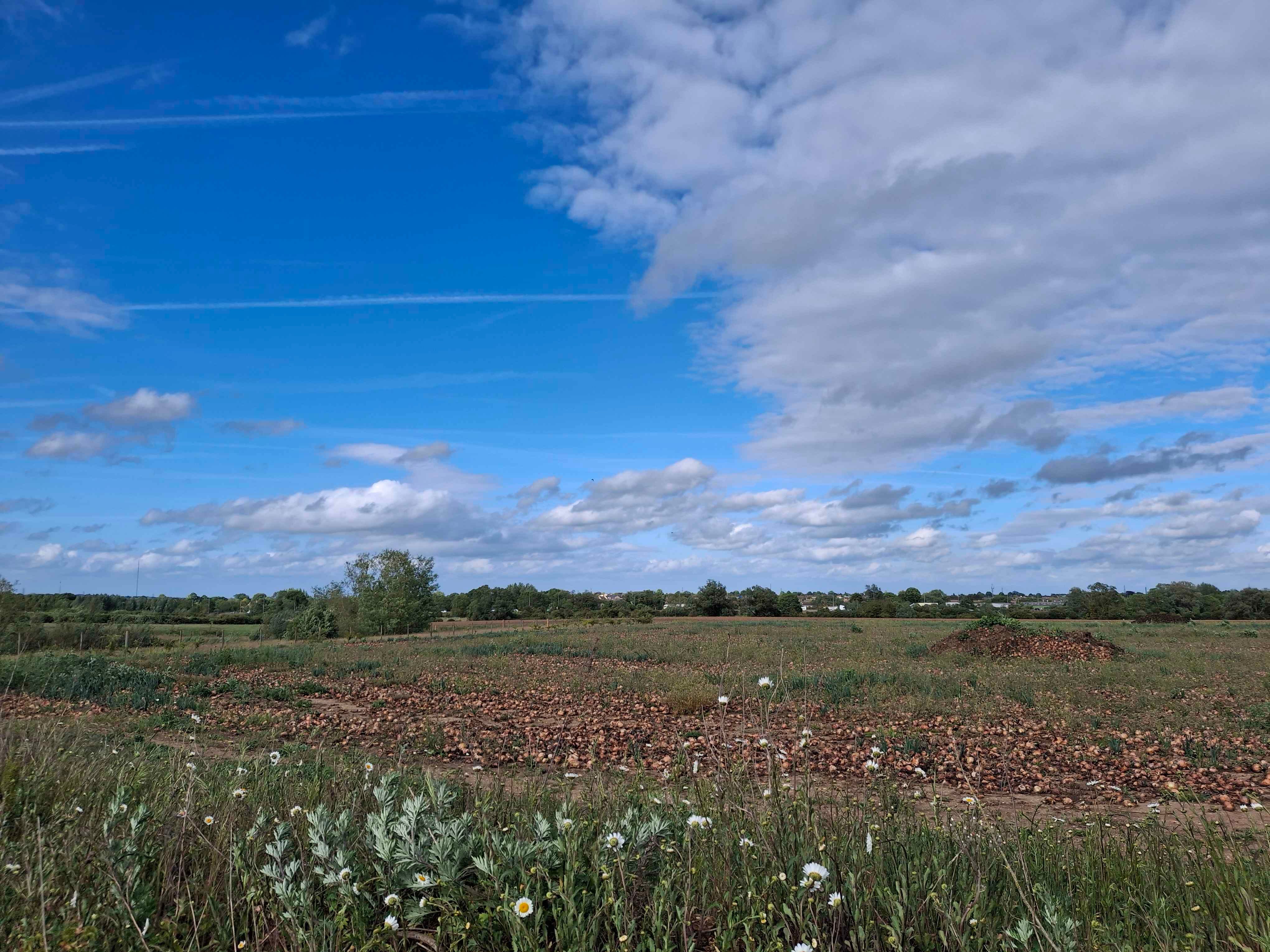
It was the field life, however, which largely captured our attention. Several dozen Linnets were a-chatter in the onion field just beside us, and drawing our gaze from the direction of the water, we soon began to catch little glimpses of them. Every time we took a step forward another small group of Linnets flushed up above the great mounds of onions piled high in the field, but they rose so quickly and disappeared almost before we had a chance to register their presence. With some persistence we earned some brief sights of the Linnets through our binoculars, just catching a hint of their beautiful chestnut coloured backs and silvery heads. With this magnified view of the flocking birds, we discovered a couple of male Reed Buntings amongst them too; their black head and streaked back setting them apart from the dainty Linnets.
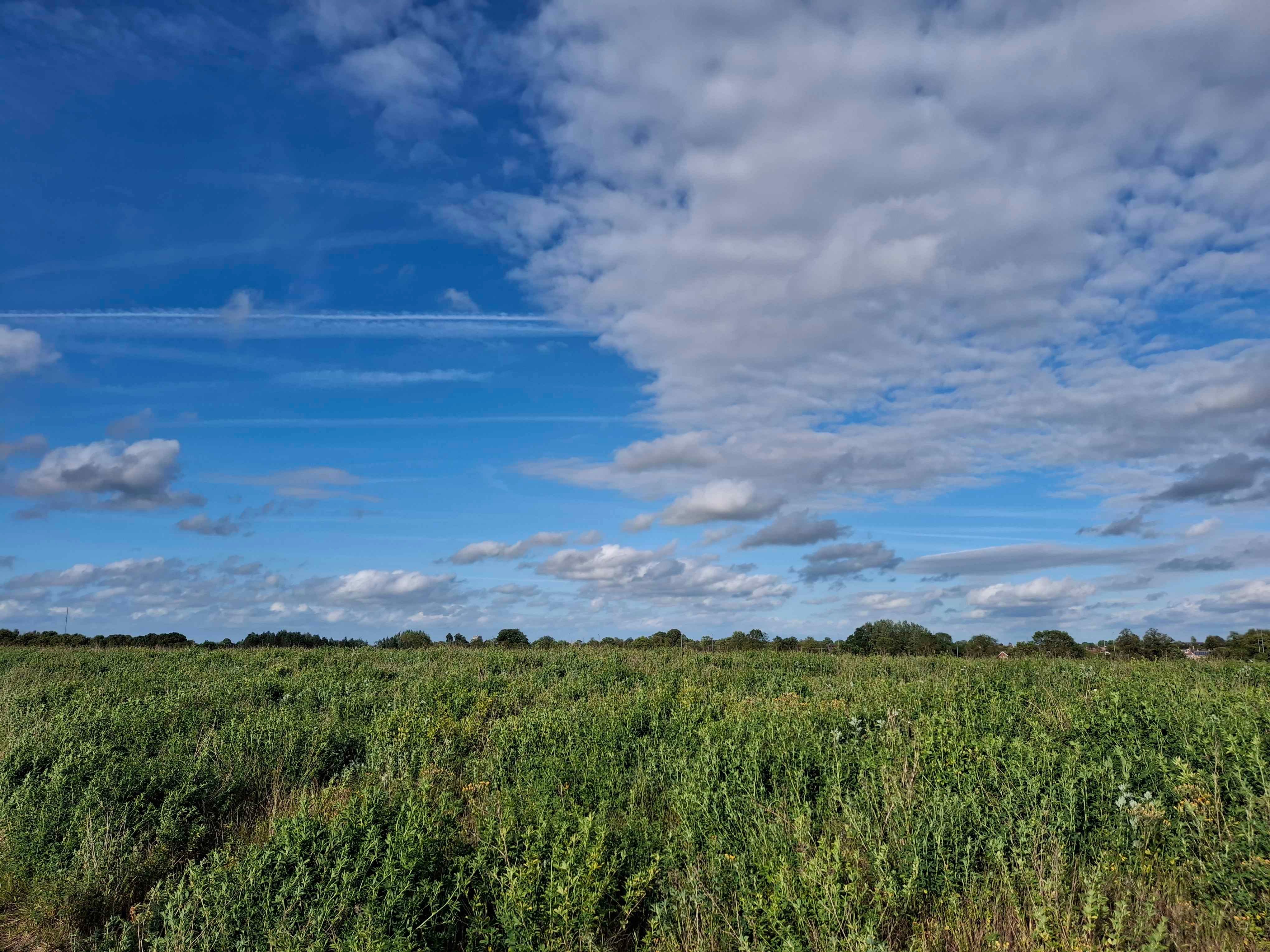
As we neared the field’s end, a Yellowhammer called out its characteristic ‘a-little-bit-of-bread-and-no-cheese’ song in the mature bordering hedgerow, and Skylarks fluttered all around us. It was incredible how numerous the Skylarks were, and there were clear signs these delightful aerial songsters had an established nesting site in this scrubby field, with one little bird hovering low besides us with a beak full of insects to deliver to its chicks. Both down on the water, and out in these fields, a plethora of common and declining species were absolutely flourishing, proving that I’d had little to fear after all. Although most birds seemed to have vacated the western pits, there was such an abundance benefitting from this protected eastern region of the gravel pits.
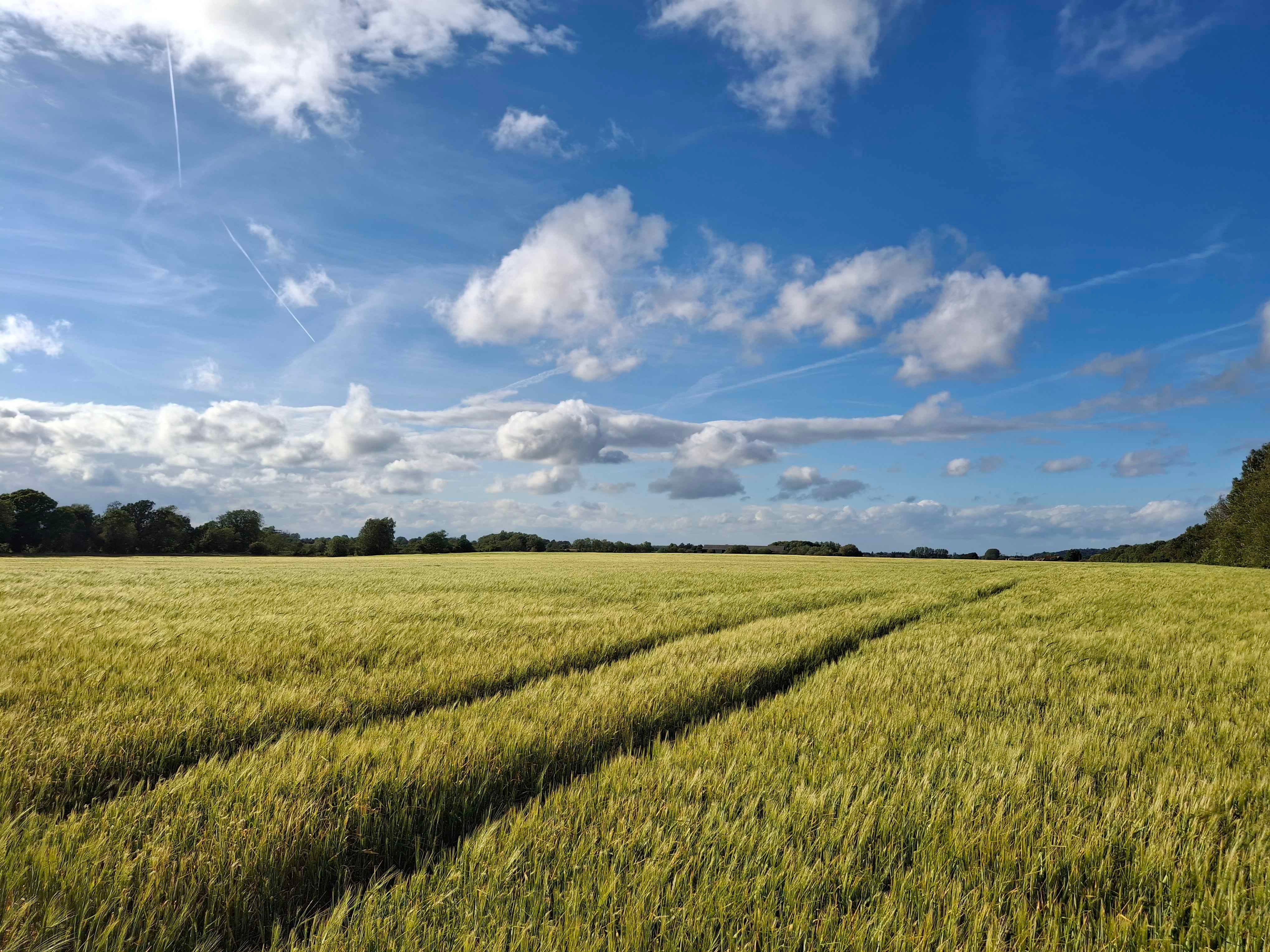
Time ran away with us as we slowly explored the circular footpath around the nature reserve, and evening was drawing on by the time we crossed the lane once more, and passed back through the wheat field. The late light was golden, casting the dancing heads of the still green corn with a hint of the wheaten shade they’ll soon take on as summer arrives. In contrast to earlier that afternoon, I wandered amongst the fields with a much fuller heart, and a completely new, changed impression of Broom as a whole.
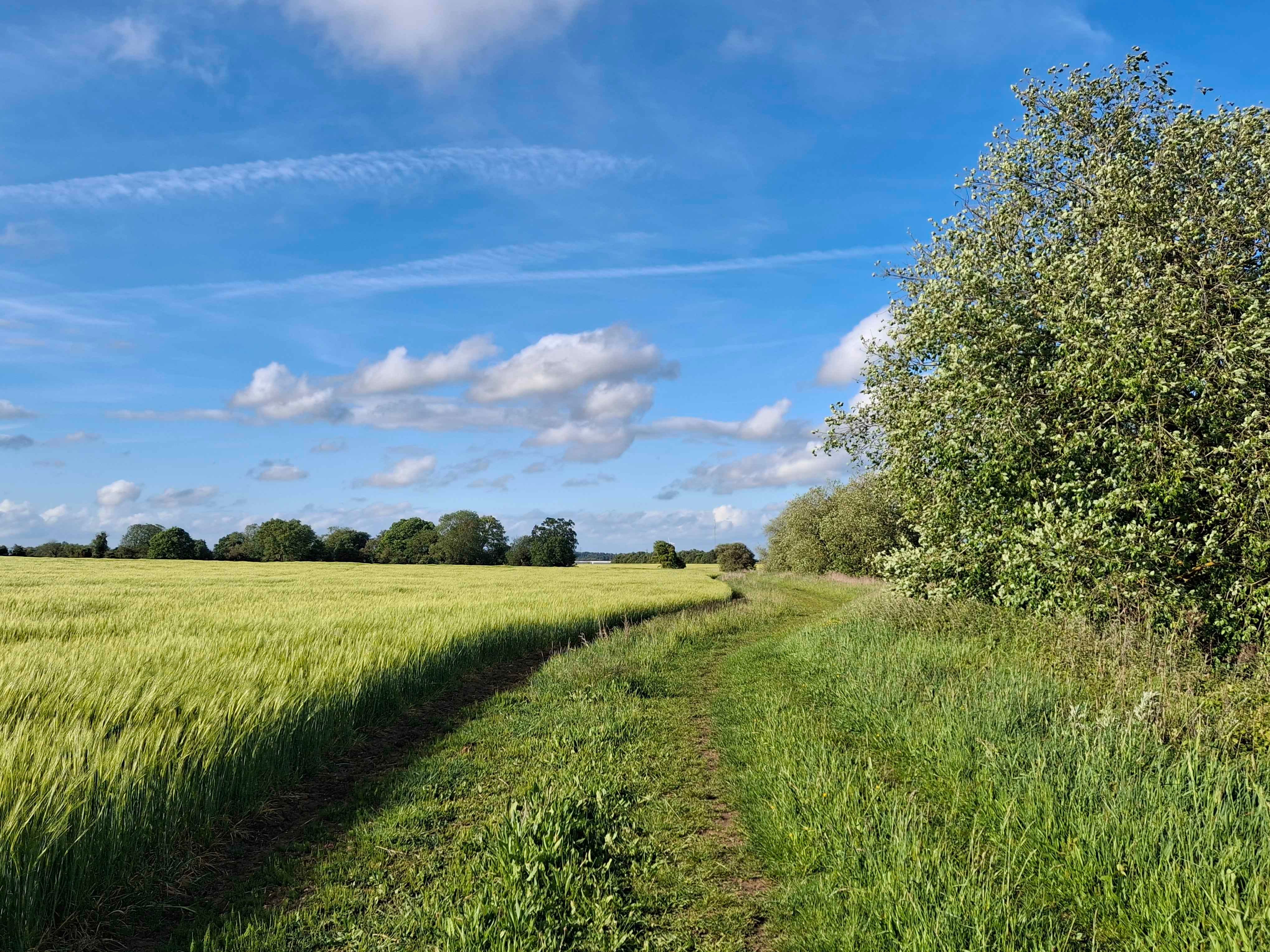
Following the winding curve of the tree dotted path, yet more Skylarks sang with vigour just above us, and, amongst the tightly climbing Ivy of a bare branched tree, a little Yellowhammer emerged to pause on a perfectly framed perch; its bright yellow feathers popping vividly against the dark green of the surrounding Ivy leaves. In its beak, several tiny insects were carefully stashed - a feast for its nestlings snuggled in their woven nest hidden somewhere nearby.
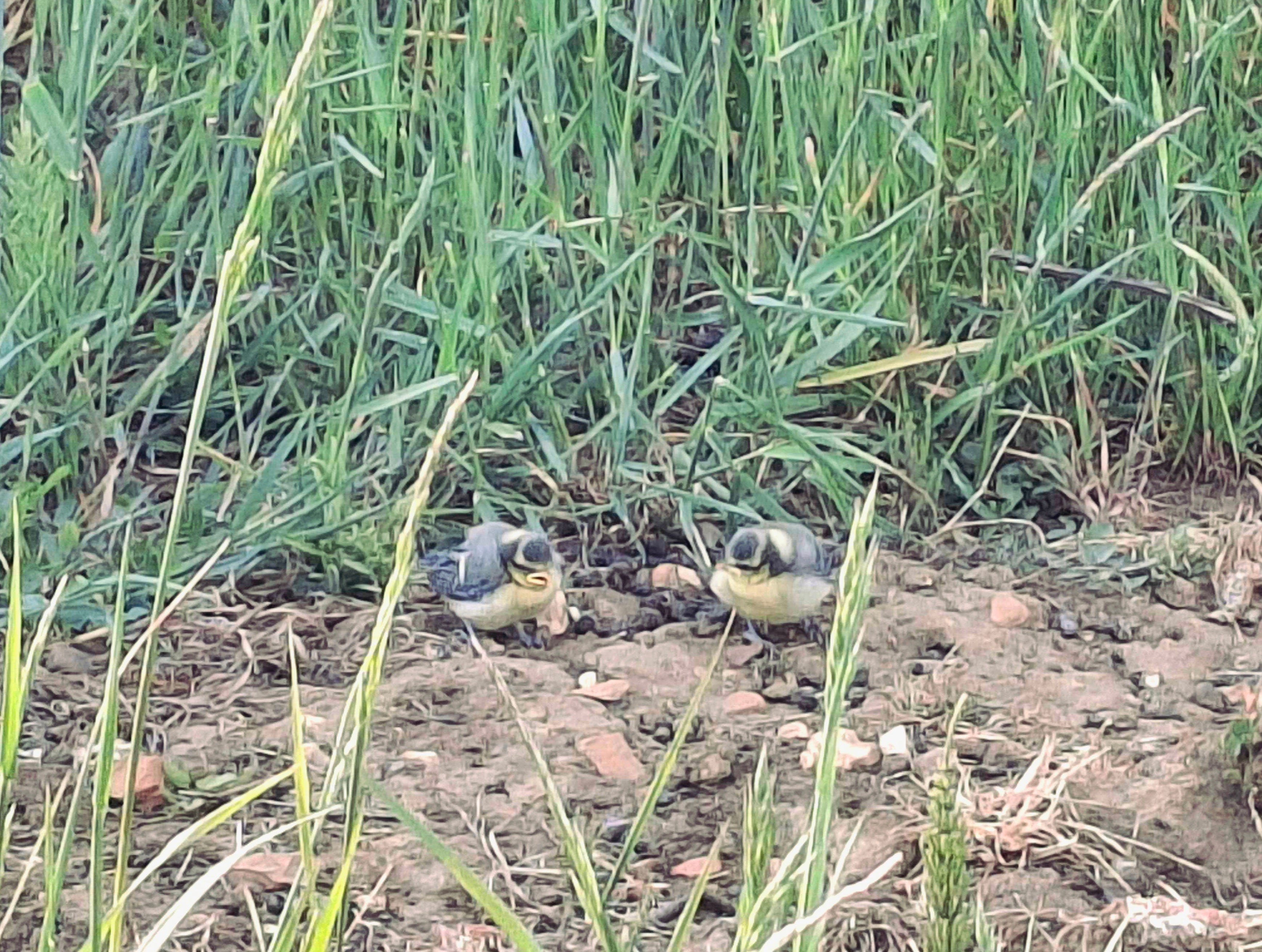
Just a few steps away, a far from hidden pair of Blue Tit fledglings were resting on the dry, bare clumps of soil beneath the tall wheat stems. Their loud, begging call gave their position away, as their yellow bills opened in a wide circle to let out the sound. Their downy baby feathers were so fuzzy, and their little bodies so perfectly round. Tiny fledglings are always the image of cuteness at this time of year, and Blue Tit fledglings are amongst my favourites. We left this noisy little duo behind as we headed on, still begging intently in the hope of some food. Hopefully their parents were close by gathering morsels to appease their ravenous younglings!
This field edge path led us to the one place at the old gravel pits which had been left untroubled by the passing of time. Entering the swaying, windblown trees a stone’s throw from Peacocks Lake, I was so pleased and relieved to see that the grove of ivy clad woodland remained untouched, with its narrow, mystical lake at its heart.
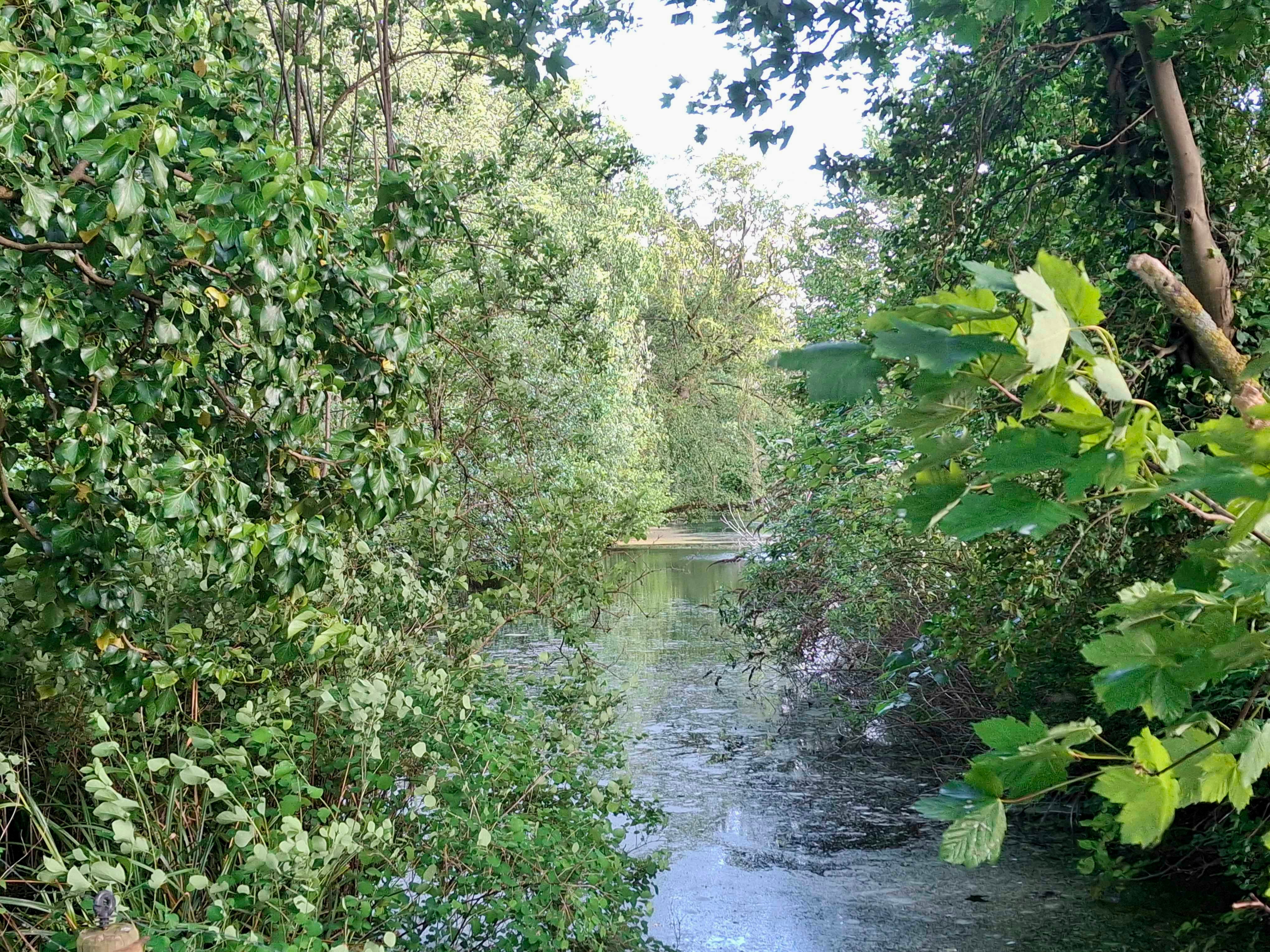
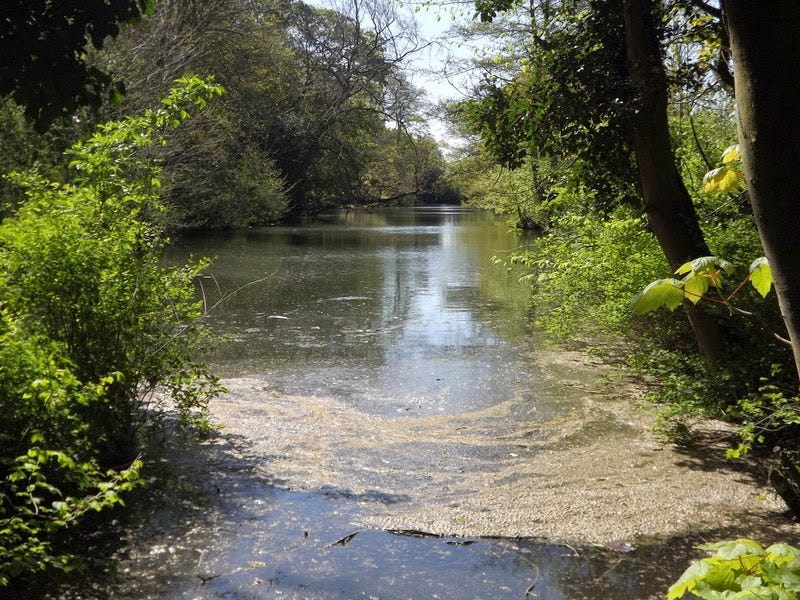
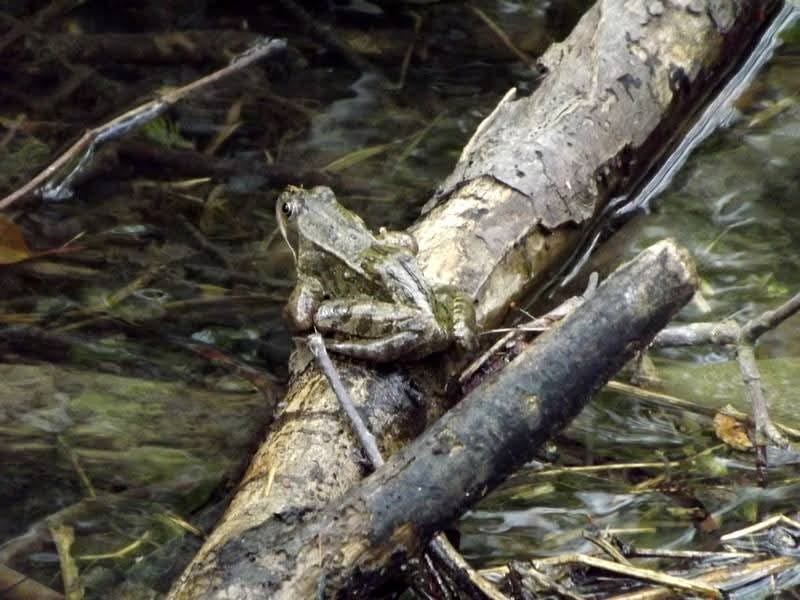
This little hidden haven was always a place of such magic to me as a child; a mysterious place full of secrets and fuel for the imagination. It still held on firmly to its charm, despite the ensuing years. The miniature sluice endured amongst the dappled shadows of the tall surrounding trees, where a Frog had been a favourite sighting when we’d cleared out the leaf litter and debris clogging the water way as children.
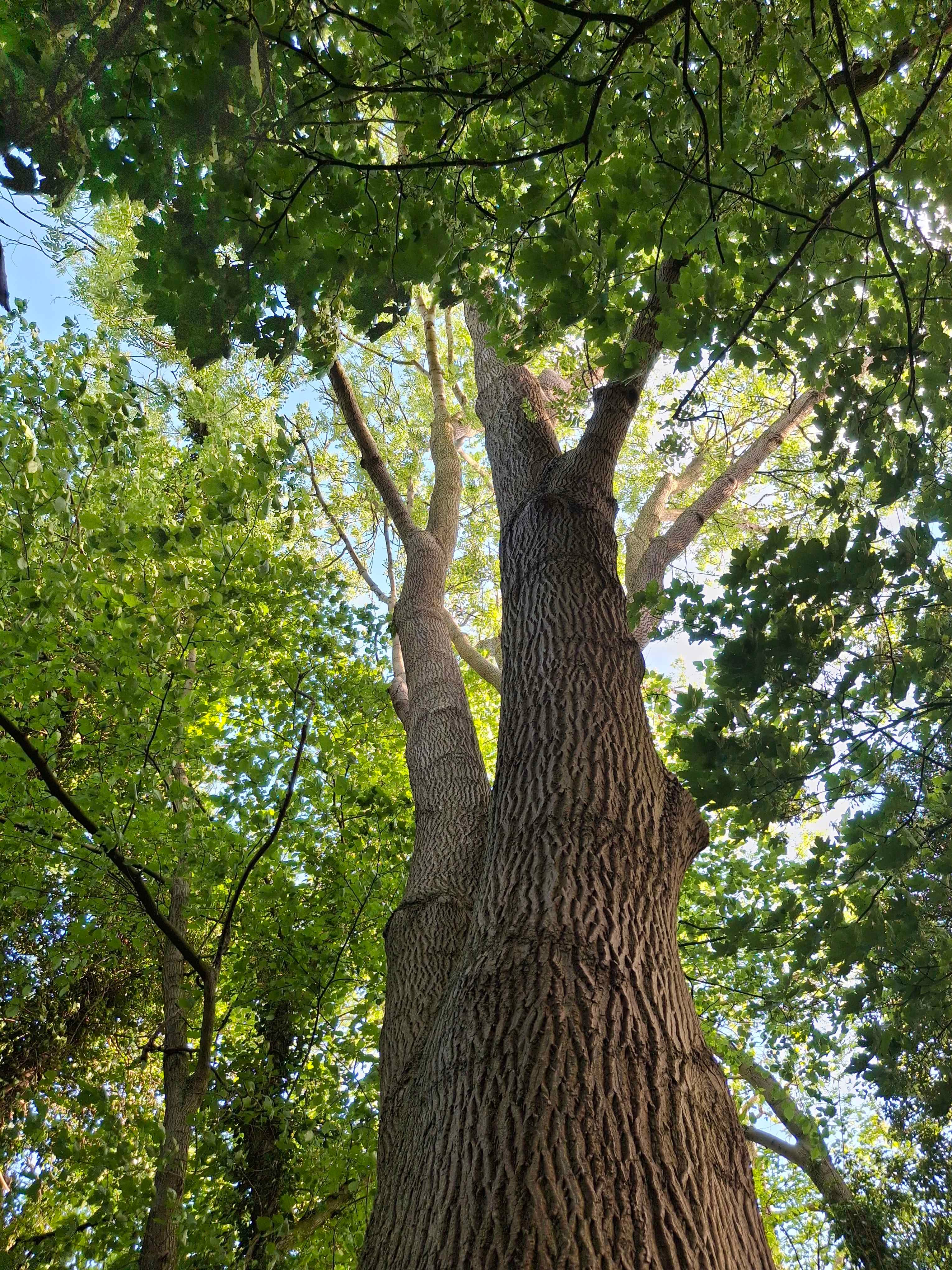
The water actually looked far healthier than it once did, framed just as I remember by a curtain of ivy and tree boughs, and amongst these lakeside trees, we met the most extraordinary Ash; its far spreading branches towering above us as we gazed up into the green of its perfectly arranged gathering of leaflets.
It was a wonderfully positive way to end our first return visit, after a slightly rocky, uncertain start. As hard as it may have been to see Peacocks Lake so altered and off limits, I do think Broom as a whole has, for the most part, changed for the better. All the diverse life we’d once sighted at the old pits was still here, but had now found an even lovelier, more permanent home over at Broom East Nature Reserve. With so many sightings each year, the gravel pits are increasingly securing their place as one of the very best birding sites in Bedfordshire, and it was lovely to see that new species like the Marsh Harrier had moved in since we’d last visited back in 2015.
The gravel pits continue to expand, with a vast area now being worked to the south of Broom, where newly formed pools are already beginning to throw up some rarities. Just a few weeks ago, these southern workings welcomed a visiting Spoonbill, an incredibly unusual guest in the county. This dynamic manmade landscape is ever constantly transforming, and as the gravel pits grow, I hope there will be more areas dedicated to the extraordinary wildlife which now calls Broom home. We’d noticed a huge development here over the course of ten years, and as the site continues to mature and evolve, who knows just what a remarkable haven for Nature it might truly become one day, or the incredible species which might begin to call this area home?

This was a really engaging piece that drew me through not only the landscape itself but your experience within it. Our memories and emotions are so tied to the places that shape us and it can be easy to forget that until we re-immerse ourselves. Thank you for taking us with you
Thank you Poppy. I really felt the ups and downs of this trip and am so glad it was largely positive in the end. I also think that the bird I heard each morning while I ate my breakfast in Malaysia might have been a Lapwing thanks to the links you provide! XXxxx